Woodrow Wilson
Biography
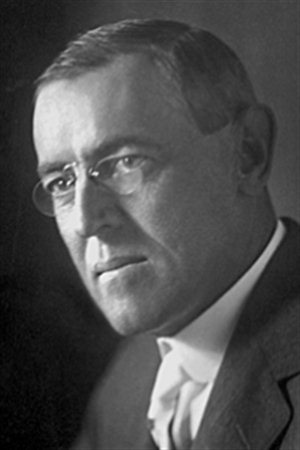
Thomas Woodrow Wilson (December 28, 1856 – February 3, 1924) Was the 28th President of the United States, from 1913 to 1921. A leader of the Progressive Movement, he served as President of Princeton University from 1902 to 1910, and then as the Governor of New Jersey from 1911 to 1913. Running against Republican incumbent William Howard Taft and Progressive ("Bull Moose") Party candidate Theodore Roosevelt, a former President, Wilson was elected President as a Democrat in 1912. In his first term as President, Wilson persuaded a Democratic Congress to pass major progressive reforms. Historian John M. Cooper argues that, in his first term, Wilson successfully pushed a legislative agenda that few presidents have equaled, and remained unmatched up until the New Deal. Narrowly re-elected in 1916, he had full control of American entry into World War I, and his second term centered on World War I and the subsequent peace treaty negotiations in Paris. He based his re-election campaign around the slogan, "He kept us out of war", but U.S. neutrality was challenged in early 1917 when the German Empire began unrestricted submarine warfare despite repeated strong warnings and tried to enlist Mexico as an ally. In April 1917, Wilson asked Congress to declare war. During the war, Wilson focused on diplomacy and financial considerations, leaving the waging of the war itself primarily in the hands of the Army. On the home front in 1917, he began the United States' first draft since the American Civil War, borrowed billions of dollars in war funding through the newly established Federal Reserve Bank and Liberty Bonds, set up the War Industries Board, promoted labor union cooperation, supervised agriculture and food production through the Lever Act, took over control of the railroads, and suppressed anti-war movements. During his term in office, Wilson gave a well-known Flag Day speech that fueled the wave of anti-German sentiment sweeping the country in 1917–18. In the late stages of the war, Wilson took personal control of negotiations with Germany, including the armistice. In 1918, he issued his Fourteen Points, his view of a post-war world that could avoid another terrible conflict. In 1919, he went to Paris to create the League of Nations and shape the Treaty of Versailles, with special attention on creating new nations out of defunct empires. In 1919, Wilson engaged in an intense fight with Henry Cabot Lodge and the Republican-controlled Senate over giving the League of Nations power to force the U.S. into a war. Wilson collapsed with a debilitating stroke that left his wife in control until he left office in March 1921. The Senate rejected the Treaty of Versailles, the U.S. never joined the League, and the Republicans won a landslide in 1920 by denouncing Wilson's policies. An intellectual with very high writing standards, Wilson was a highly effective partisan campaigner as well as legislative strategist. A Presbyterian of deep religious faith, Wilson appealed to a gospel of service and infused a profound sense of moralism into his idealistic internationalism, now referred to as "Wilsonian". Wilsonianism calls for the United States to enter the world arena to fight for democracy, and has been a contentious position in American foreign policy. Wilson was born in Staunton, Virginia on December 28, 1856 as the third of four children of Joseph Ruggles Wilson (1822–1903) and Jessie Janet Woodrow (1826–1888). Wilson's father was originally from Steubenville, Ohio, where his grandfather published a newspaper, The Western Herald and Gazette, which was pro-tariff and anti-slavery. Wilson's father was one of the founders of the Southern Presbyterian Church in the United States (PCUS) after it split from the northern Presbyterians in 1861. Joseph R. Wilson served as the first permanent clerk of the southern church's General Assembly, was Stated Clerk from 1865–1898 and was Moderator of the PCUS General Assembly in 1879. Wilson spent the majority of his childhood, up to age 14, in Augusta, Georgia, where his father was minister of the First Presbyterian Church. Wilson was over ten years of age before he learned to read. His difficulty reading may have indicated dyslexia, Wilson attended Davidson College in North Carolina for the 1873–1874 school year. In 1879, Wilson attended law school at the University of Virginia for one year. Although he never graduated, during his time at the university he was heavily involved in the Virginia Glee Club and the Jefferson Literary and Debating Society, serving as the society's president. In January 1882, Wilson started a law practice in Atlanta. One of his University of Virginia classmates, Edward Ireland Renick, invited him to join his new law practice as partner and Wilson joined him in May 1882. He passed the Georgia Bar. On October 19, 1882, he appeared in court before Judge George Hillyer to take his examination for the bar, which he passed easily. Competition was fierce in the city with 143 other lawyers, and he found few cases to keep him occupied. Wilson's mother was possibly a hypochondriac and Wilson himself seemed to think that he was often in poorer health than he really was. He suffered from hypertension at a relatively early age and may have suffered his first stroke when he was 39. In 1885, he married Ellen Louise Axson, the daughter of a minister from Savannah, Georgia during a visit to her relatives in Rome, Georgia. They had three daughters: Margaret Woodrow Wilson (1886–1944); Jessie Wilson (1887–1933); and Eleanor R. Wilson (1889–1967). Wilson's Pierce Arrow, which is on display in his hometown of Staunton, Virginia. Wilson was an early automobile enthusiast, and he took daily rides while he was President. His favorite car was a 1919 Pierce-Arrow, in which he preferred to ride with the top down. Wilson was an avid baseball fan. In 1915, he became the first sitting president to attend a World Series game. Wilson had been a center fielder during his Davidson College days. When he transferred to Princeton he was unable to make the varsity team and so became the team's assistant manager. He was the first President to throw out a first ball at a World Series game. He cycled regularly, including several cycling vacations in the English Lake District. Wilson began his graduate studies at Johns Hopkins University in 1883 and three years later completed his doctoral dissertation, "Congressional Government: A Study in American Politics" During the academic year 1886-1887, Wilson was a visiting lecturer at Cornell University, but failed to gain a permanent position. However, he was tapped into the Irving Literary Society by the brothers of his fraternity, Phi Kappa Psi. He joined the faculty of Bryn Mawr College (1885–88) and then Wesleyan University (1888–90), where he also coached the football team and founded the debate team – still called the T. Woodrow Wilson debate team. In 1890, Wilson joined the Princeton faculty as professor of jurisprudence and political economy. While there, he was one of the faculty members of the short-lived coordinate college, Evelyn College for Women. Additionally, Wilson became the first lecturer of Constitutional Law at New York Law School where he taught with Charles Evans Hughes. Wilson was annoyed that Princeton was not living up to its potential, complaining "There's a little college down in Kentucky which in 60 years has graduated more men who have acquired prominence and fame than has Princeton in her 150 years." Under the influence of Walter Bagehot's The English Constitution, Wilson saw the United States Constitution as pre-modern, cumbersome, and open to corruption. An admirer of Parliament, Wilson favored a parliamentary system for the United States. Writing in the early 1880s: I ask you to put this question to yourselves, should we not draw the Executive and Legislature closer together? Should we not, on the one hand, give the individual leaders of opinion in Congress a better chance to have an intimate party in determining who should be president, and the president, on the other hand, a better chance to approve himself a statesman, and his advisers capable men of affairs, in the guidance of Congress Wilson started Congressional Government, his best-known political work, as an argument for a parliamentary system, but he was impressed by Grover Cleveland, and Congressional Government emerged as a critical description of America's system, with frequent negative comparisons to Westminster. He said, "I am pointing out facts—diagnosing, not prescribing remedies." Wilson believed that America's intricate system of checks and balances was the cause of the problems in American governance. He said that the divided power made it impossible for voters to see who was accountable. If government behaved badly, Wilson asked: How is the schoolmaster, the nation, to know which boy needs the whipping? ... Power and strict accountability for its use are the essential constituents of good government... It is, therefore, manifestly a radical defect in our federal system that it parcels out power and confuses responsibility as it does. The main purpose of the Convention of 1787 seems to have been to accomplish this grievous mistake. The "literary theory" of checks and balances is simply a consistent account of what our Constitution makers tried to do; and those checks and balances have proved mischievous just to the extent which they have succeeded in establishing themselves. Wilson singled out the United States House of Representatives for particular criticism: ... divided up, as it were, into forty-seven seignories, in each of which a Standing Committee is the court-baron and its chairman lord-proprietor. These petty barons, some of them not a little powerful, but none of them within reach the full powers of rule, may at will exercise an almost despotic sway within their own shires, and may sometimes threaten to convulse even the realm itself. Wilson said that the Congressional committee system was fundamentally undemocratic in that committee chairs, who ruled by seniority, determined national policy although they were responsible to no one except their constituents; and that it facilitated corruption. When William Jennings Bryan captured the Democratic nomination from Cleveland's supporters in 1896, Wilson refused to support the ticket. Instead, he cast his ballot for John M. Palmer, the presidential candidate of the National Democratic Party, or Gold Democrats, a short-lived party that supported a gold standard, low tariffs, and limited government. In his last scholarly work in 1908, Constitutional Government of the United States, Wilson said that the presidency "will be as big as and as influential as the man who occupies it". By the time of his presidency, Wilson hoped that Presidents could be party leaders in the same way British prime ministers were. Wilson also hoped that the parties could be reorganized along ideological, not geographic, lines. He wrote, "Eight words contain the sum of the present degradation of our political parties: No leaders, no principles; no principles, no parties." Wilson also studied public administration, which he called "government in action; it is the executive, the operative, the most visible side of government, and is of course as old as government itself". Wilson was concerned with the implementation of government. He faulted political leaders who focused on philosophical issues and the nature of government and dismissed the critical issues of government administration as mere "practical detail". He thought such attitudes represented the requirements of smaller countries and populations. By his day, he thought, "it is getting to be harder to run a constitution than to frame one." He complained that studies of administration drew principally on the history of Continental Europe and an American equivalent was required. He summarized the growth of such foreign states as Prussia, France, and England, highlighting the events that led to advances in administration. By contrast, he thought the United States required greater compromise because of the diversity of public opinion and the difficulty of forming a majority opinion. Thus practical reform to the government is necessarily slow. Yet Wilson insisted that "administration lies outside the proper sphere of politics" Essentially, the items under the discretion of administration must be limited in scope, as to not block, nullify, obfuscate, or modify the implementation of governmental decree made by the executive branch. The trustees promoted Professor Wilson to president of Princeton in 1902, replacing Francis Landey Patton, whom the Trustees perceived to be an inefficient administrator. Although the school's endowment was barely $4 million, Wilson sought $2 million for a preceptorial system of teaching, $1 million for a school of science, and nearly $3 million for new buildings and salary increases. As a long-term objective, Wilson sought $3 million for a graduate school and $2.5 million for schools of jurisprudence and electrical engineering, as well as a museum of natural history. To emphasize the development of expertise, Wilson instituted academic departments and a system of core requirements where students met in groups of six with preceptors, followed by two years of concentration in a selected major. He tried to raise admission standards and to replace the "gentleman's C" with serious study. Wilson aspired, as he told alumni, "to transform thoughtless boys performing tasks into thinking men". In 1906–10, he attempted to curtail the influence of social elites by abolishing the upper-class eating clubs and moving the students into colleges, also known as quadrangles. Wilson's Quad Plan was met with fierce opposition from Princeton's alumni, most importantly Moses Taylor Pyne, the most powerful of Princeton's Trustees. Wilson held his position, saying that giving in "would be to temporize with evil". Late in his tenure, Wilson confronted Andrew Fleming West, Dean of the graduate school, and West's ally former President Grover Cleveland who was a trustee. Wilson wanted to integrate the proposed graduate building into the same area with the undergraduate colleges. West wanted them to remain separate. The trustees rejected Wilson's plan for colleges in 1908, and then endorsed West's alternative in 1909. The national press covered the confrontation as a battle of the elites represented by West versus democracy represented by Wilson. In 1910 Wilson ran for Governor of New Jersey against the Republican candidate Vivian M. Lewis, the State Commissioner of Banking and Insurance. Wilson's campaign focused on his independence from machine politics, and he promised that if elected he would not be beholden to party bosses. Wilson soundly defeated Lewis in the general election by a margin of more than 49,000 votes, although Republican William Howard Taft had carried New Jersey in the 1908 presidential election by more than 80,000 votes. In the 1910 election the Democrats also took control of the General Assembly. The State Senate, however, remained in Republican control by a slim margin. After taking office, Wilson set in place his reformist agenda, ignoring the demands of party machinery. While governor, in a period spanning six months, Wilson established state primaries. This all but took the party bosses out of the presidential election process in the state. He also revamped the public utility commission, and introduced worker's compensation. Wilson's popularity as governor and his status in the national media gave impetus to his presidential campaign in 1912. He chose Indiana Governor Thomas R. Marshall as his running mate The convention deadlocked for more than 40 ballots as no candidate could reach the two-thirds vote required to win the nomination. A leading contender was House Speaker Champ Clark, a prominent progressive strongest in the border states. Other contenders were Governor Judson Harmon of Ohio, and Representative Oscar Underwood of Alabama. They lacked Wilson's charisma and dynamism. Publisher William Randolph Hearst, a leader of the left wing of the party, supported Clark. William Jennings Bryan, the nominee in 1896, 1900 and 1908, played a critical role in opposition to any candidate who had the support of "the financiers of Wall Street". He finally announced for Wilson, who won on the 46th ballot. In the campaign Wilson promoted the "New Freedom", emphasizing limited federal government and opposition to monopoly powers, often after consultation with his chief advisor Louis D. Brandeis. In the contest for the Republican nomination, President William Howard Taft defeated former president Theodore Roosevelt, who then ran as a Bull Moose Party candidate, which assisted in Wilson's success in the electoral college. Wilson took 41.8% of the popular vote and won 435 electoral votes from 40 states. Wilson was the first Southerner in the White House since 1869 and worked closely with Southern leaders. Since 1856 he and Grover Cleveland were the only Democrats elected president, so felt a need to appoint Democrats to all federal positions. In resolving economic policy issues, he had to manage the conflict between two wings of his party, the agrarian wing led by Bryan and the pro-business wing. With large Democratic majorities in Congress and a healthy economy, he promptly seized the opportunity to implement his agenda. In 1913 he also became the first president to deliver the State of the Union address in person since 1801 when Thomas Jefferson discontinued this practice. Wilson's first wife Ellen died on August 6, 1914, casting him into a deep depression. In 1915, he met Edith Galt. They married later that year on December 18. Wilson secured passage of the Federal Reserve Act in late 1913. Wilson had tried to find a middle ground between conservative Republicans, led by Senator Nelson W. Aldrich, and the powerful left wing of the Democratic party, led by William Jennings Bryan, who strenuously denounced private banks and Wall Street. The latter group wanted a government-owned central bank that could print paper money as Congress required. The compromise, based on the Aldrich Plan but sponsored by Democratic Congressmen Carter Glass and Robert Owen, allowed the private banks to control the 12 regional Federal Reserve Banks, but appeased the agrarians by placing controlling interest in the System in a central board appointed by the president with Senate approval. Moreover, Wilson convinced Bryan's supporters that because Federal Reserve notes were obligations of the government, the plan met their demands for an elastic currency. Having 12 regional banks was meant to weaken the influence of the powerful New York banks, a key demand of Bryan's allies in the South and West. This decentralization was a key factor in winning Glass' support. Wilson named Paul Warburg and other prominent bankers to direct the new system. While power was supposed to be decentralized, the New York branch dominated the Fed as the "first among equals". The Democrats lowered tariffs with the Underwood Tariff in 1913, though its effects were soon overwhelmed by the changes in trade caused by World War I. Reaching out to new constituencies, a series of programs were targeted at farmers. The Smith–Lever Act of 1914 created the modern system of agricultural extension agents sponsored by the state agricultural colleges. The agents taught new techniques to farmers. The 1916 Federal Farm Loan Act provided for issuance of low-cost long-term mortgages to farmers. Child labor was curtailed by the Keating–Owen Act of 1916, but the U.S. Supreme Court declared it unconstitutional in 1918. No major child labor prohibition would take effect until the 1930s. The railroad brotherhoods threatened in summer 1916 to shut down the national transportation system. Wilson tried to bring labor and management together, but when management refused, he had Congress pass the Adamson Act in September 1916, which avoided the strike by imposing an 8-hour workday in the industry (at the same pay as before). It helped Wilson gain union support for his reelection; the act was approved by the Supreme Court. Wilson uses tariff, currency and anti-trust laws to prime the pump and get the economy working in a 1913 political cartoon Antitrust Wilson broke with the big lawsuit tradition of his predecessors Taft and Roosevelt as Trustbusters, finding a new approach to encouraging competition through the Federal Trade Commission, which stopped perceived unfair trade practices. In addition, he pushed through Congress the Clayton Antitrust Act making certain business practices illegal (such as price discrimination, agreements prohibiting retailers from handling other companies' products, and directorates and agreements to control other companies). The power of this legislation was greater than previous anti-trust laws, because individual officers of corporations could be held responsible if their companies violated the laws. More importantly, the new laws set out clear guidelines that corporations could follow, a dramatic improvement over the previous uncertainties. This law was considered the "Magna Carta" of labor by Samuel Gompers because it ended union liability antitrust laws. In 1916, under threat of a national railroad strike, he approved legislation that increased wages and cut working hours of railroad employees; there was no strike. Wilson spent 1914 through to the beginning of 1917 trying to keep America out of the war in Europe. He offered to be a mediator, but neither the Allies nor the Central Powers took his requests seriously. Republicans, led by Theodore Roosevelt, strongly criticized Wilson's refusal to build up the U.S. Army in anticipation of the threat of war. Wilson won the support of the peace element (especially women and churches) by arguing that an army buildup would provoke war. Secretary of State William Jennings Bryan, whose pacifist recommendations were ignored by Wilson, resigned in 1915. On December 18, 1916, Wilson unsuccessfully offered to mediate peace. As a preliminary he asked both sides to state their minimum terms necessary for future security. The Central Powers replied that victory was certain, and the Allies required the dismemberment of their enemies' empires. No desire for peace or common ground existed, and the offer lapsed. While German submarines were killing sailors and civilian passengers Wilson demanded that Germany stop, but he kept the U.S. out of the war. Britain had declared a blockade of Germany to prevent neutral ships from carrying contraband goods to Germany. Wilson protested some British violation of neutral rights, where no one was killed. His protests were mild, and the British knew America would not see it as a casus belli. Election of 1916 Renominated in 1916, Wilson used as a major campaign slogan "He kept us out of war", referring to his administration's avoiding open conflict with Germany or Mexico while maintaining a firm national policy. Wilson, however, never promised to keep out of war regardless of provocation. In his acceptance speech on September 2, 1916, Wilson pointedly warned Germany that submarine warfare that took American lives would not be tolerated, saying "The nation that violates these essential rights must expect to be checked and called to account by direct challenge and resistance. It at once makes the quarrel in part our own." Wilson narrowly won the election, defeating Republican candidate Charles Evans Hughes. As governor of New York from 1907–1910, Hughes had a progressive record strikingly similar to Wilson's as governor of New Jersey. Theodore Roosevelt would comment that the only thing different between Hughes and Wilson was a shave. However, Hughes had to try to hold together a coalition of conservative Taft supporters and progressive Roosevelt partisans and so his campaign never seemed to take a definite form. Wilson ran on his record and ignored Hughes, reserving his attacks for Roosevelt. When asked why he did not attack Hughes directly, Wilson told a friend to "Never murder a man who is committing suicide." The result was exceptionally close and the outcome was in doubt for several days. The vote came down to several close states. Wilson won California by 3,773 votes out of almost a million votes cast and New Hampshire by 54 votes. Hughes won Minnesota by 393 votes out of over 358,000. In the final count, Wilson had 277 electoral votes vs. Hughes 254. Wilson was able to win by picking up many votes that had gone to Teddy Roosevelt or Eugene V. Debs in 1912. The U.S. had made a declaration of neutrality in 1914. Wilson warned citizens not to take sides in the war for fear of endangering wider U.S. policy. In his address to Congress in 1914, Wilson stated, "Such divisions amongst us would be fatal to our peace of mind and might seriously stand in the way of the proper performance of our duty as the one great nation at peace, the one people holding itself ready to play a part of impartial mediation and speak the counsels of peace and accommodation, not as a partisan, but as a friend." The U.S. maintained neutrality despite increasing pressure placed on Wilson after the sinking of the British passenger liner RMS Lusitania with American citizens on board. Wilson found it increasingly difficult to maintain U.S. neutrality after Germany, despite its promises in the Arabic pledge and the Sussex pledge, initiated a program of unrestricted submarine warfare early in 1917 that threatened U.S. commercial shipping. Following the revelation of the Zimmermann Telegram, Germany's attempt to enlist Mexico as an ally against the U.S., Wilson took America into World War I to make "the world safe for democracy." The U.S. did not sign a formal alliance with the United Kingdom or France but operated as an "associated" power. The U.S. raised a massive army through conscription and Wilson gave command to General John J. Pershing, allowing Pershing a free hand as to tactics, strategy and even diplomacy. Wilson had decided by then that the war had become a real threat to humanity. Unless the U.S. threw its weight into the war, as he stated in his declaration of war speech on April 2, 1917, War Message President Wilson delivering his war message before Congress. April 2, 1917. Woodrow Wilson delivered his War Message to Congress on the evening of April 2, 1917. Introduced to great applause, he remained intense and almost motionless for the entire speech, only raising one arm as his only bodily movement. Wilson announced that his previous position of "armed neutrality" was no longer tenable now that the Imperial German Government had announced that it would use its submarines to sink any vessel approaching the ports of Great Britain, Ireland or any of the Western Coasts of Europe. He advised Congress to declare that the recent course of action taken by the Imperial German Government constituted an act of war. He proposed that the United States enter the war to "vindicate principles of peace and justice in the life of the world as against selfish and autocratic power". He also charged that Germany had "filled our unsuspecting communities and even our offices of government with spies and set criminal intrigues everywhere afoot against our national unity of counsel, our peace within and without our industries and our commerce". Furthermore, the United States had intercepted a telegram sent to the German ambassador in Mexico City that evidenced Germany's attempt to instigate a Mexican attack upon the U.S. The German government, Wilson said, "means to stir up enemies against us at our very doors". He then warned that "if there should be disloyalty, it will be dealt with a firm hand of repression." With 50 Representatives and 6 Senators in opposition, the declaration of war by the United States against Germany was passed by the Congress on April 4, 1917, and was approved by the President on April 6, 1917. Wilson's domestic economic policies were strongly pro-labor, but this favorable treatment was extended only to unions that supported the U.S. war effort, such as the American Federation of Labor (AFL). During the war, Wilson worked closely with Samuel Gompers and the AFL, the railroad brotherhoods, and other 'moderate' unions, which saw enormous growth in membership and wages during Wilson's administration. As there was no rationing, consumer prices soared. As income taxes increased, white-collar workers suffered. Despite this, appeals to buy war bonds were highly successful. The purchase of wartime bonds had the result of shifting the cost of the war to the affluent 1920s. Wilson set up the first western propaganda office, the United States Committee on Public Information, headed by George Creel (thus its popular name, Creel Commission), which filled the country with patriotic anti-German appeals and conducted various forms of censorship. In an effort of reform and to shake up his World War I Mobilization program, President Wilson removed the chief of Army Signal Corps and the Chairman of the Council's Aircraft Production Board on April 18, 1918. Other foreign affairs In anticipation of the opening of the Panama Canal, Britain protested that U.S. plans to exempt U.S. vessels traveling between the Atlantic and Pacific coasts of the U.S. from tolls, in accordance with the Panama Canal Act of 1912, violated the Hay-Pauncefote Treaty. On March 5, 1914, Wilson sent a message to Congress strongly urging the repeal of the exemption. He regarded the exemption as a plain breach of the Treaty and proposed a "voluntary withdrawal from a position everywhere questioned and misunderstood." In spite of strong opposition within his own party, he forced Democrats in Congress to support a repeal of the exemption. In principal Wilson wanted to avoid the aggressive stance Theodore Roosevelt had taken toward Latin America. For example, he negotiated a treaty with Colombia in which the U.S. apologized for its role in the Panama Revolution of 1903–1904. Main articles: American Expeditionary Force Siberia and Polar Bear Expedition
Self (archive footage)

La Grippe espagnole, la grande tueuse
Self (archive footage)
Propaganda: The Manufacture of Consent
Self - Politician (archive footage)
Jim Thorpe: Lit by Lightning
Self - 28th President of the United States
Civilization
Self - in Prologue
Why Be Good? Sexuality & Censorship in Early Cinema
Self (archive footage)
Uncle Tom II: An American Odyssey
Self (archive footage)
The First World War
Himself (archive footage)
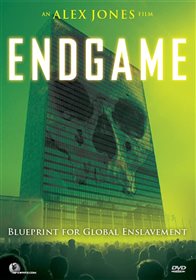
Endgame: Blueprint for Global Enslavement
Himself (archive footage)
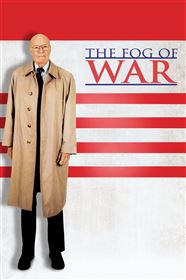
The Fog of War
Himself (archive footage) (uncredited)
Jim Thorpe: Lit by Lightning
Self - 28th President of the United States
Uncle Tom II: An American Odyssey
Self (archive footage)
La Grippe espagnole, la grande tueuse
Self (archive footage)
Propaganda: The Manufacture of Consent
Self - Politician (archive footage)
Endgame: Blueprint for Global Enslavement
Himself (archive footage)
Why Be Good? Sexuality & Censorship in Early Cinema
Self (archive footage)
The Fog of War
Himself (archive footage) (uncredited)
The First World War
Himself (archive footage)
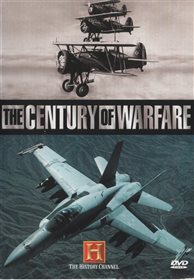
The Century of Warfare
Himself (unknown episodes)
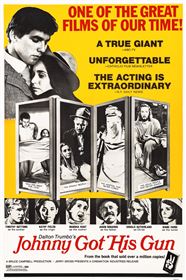
Johnny Got His Gun
Self - Opening Credits (archive footage) (uncredited)
Self (archive footage)
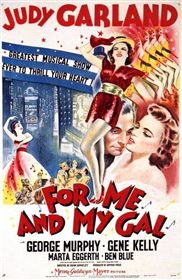
For Me and My Gal
Self - World War I Clips (archive footage) (uncredited)
Civilization
Self - in Prologue


