Philip Barry
Biography
Philip James Quinn Barry (June 18, 1896 – December 3, 1949) was an American playwright born in Rochester, New York. Early life Philip Barry was born on June 18, 1896 in Rochester, New York to James Corbett Barry and Mary Agnes Quinn Barry. James would die from appendicitis a year after Philip's birth, and his father's marble and tile business faltered from then on. His oldest brother, Edmund, who was 16 at the time, left school to take over the business and become something of a father for Philip. His play The Youngest follows a true story that actually happened to Barry. In 1910, he discovered that New York State laws that he was entitled to the entire family estate when his mother had to sell off some property. He claimed later that he never intended to keep the money. After clerical service in London during World War I and having earned his B.A. from Yale University, it was 1919 when he took advantage of the anomaly. Before signing over the estate, his mother and two elder brothers wanted him to stay with the family in Rochester. He convinced his family to let him take George Pierce Baker's renowned Workshop 47 at Harvard University; His best known work is "The Philadelphia Story" (1939), which was made into a popular 1940 film starring Katharine Hepburn, Cary Grant, and James Stewart. Hepburn, a close friend of Barry, had appeared in the play on Broadway, and bought the movie rights (with the help of her ex-boyfriend Howard Hughes), and successfully restarted her previously flagging Hollywood career with the film version. The movie was also remade as "High Society", starring Sinatra, Crosby, Kelly and Armstrong. Barry's play "Holiday" was filmed twice, the best known being George Cukor's 1938 version starring Grant and Hepburn. Philip Barry died in New York City in 1949, aged 53, of a heart attack. Plays Autonomy, 1919 A Punch for Judy, 1921 You and I, 1923, filmed in 1931 as The Bargain The Youngest, 1924 In a Garden, 1925 White Wings, 1926 Paris Bound, 1927, filmed in 1929 by Edward H. Griffith John, 1927 Holiday, 1928, filmed in 1930 by Edward H. Griffith, and in 1938 by George Cukor Cock Robin (play) (with Elmer Rice), 1928, filmed as Who Killed Cock Roobin? in 1938 Hotel Universe, 1930 Tomorrow and Tomorrow, 1931, filmed in 1932 by Richard Wallace The Animal Kingdom, 1932, filmed in 1932 by Edward H. Griffith, and as One More Tomorrow in 1946 by Peter Godfrey The Joyous Season, 1934 Bright Star, 1935 Spring Dance, 1936, filmed as Spring Madness in 1946 by S. Sylvan Simon Here Come the Clowns, 1938 The Philadelphia Story, 1939, filmed in 1940 by George Cukor, and in 1959 for TV Liberty Jones, 1941 Without Love, 1942, filmed in 1945 by Harold S. Bucquet Foolish Notion, 1945 My Name is Aquilon, 1949, adapted from Jean-Pierre Aumont's play Second Threshold, 1951, completed by Robert Sherwood

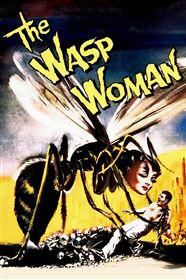
The Wasp Woman
Man
The Wasp Woman
Man


