Kathryn Bigelow
Biography
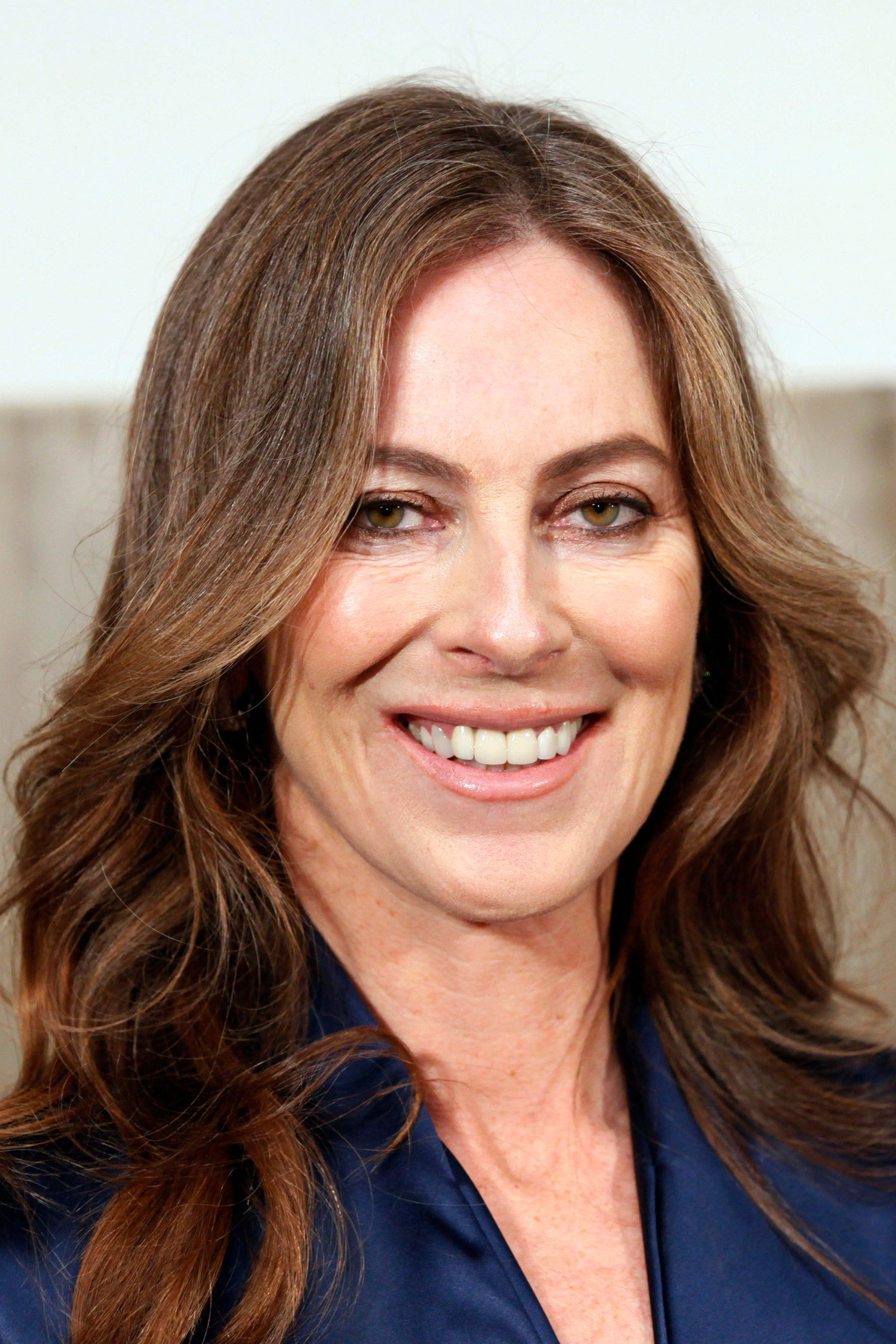
Kathryn Ann Bigelow (born November 27, 1951)[1] is an American film director, film producer, screenwriter and television director. Her best-known films are the cult horror film Near Dark (1987), the surfer/bank robbery action picture Point Break (1991), the science fiction/film noir Strange Days (1995), the historical/mystery film The Weight of Water (2000) and the war drama The Hurt Locker (2008). The Hurt Locker won the 2009 Academy Award for Best Picture, won the BAFTA Award for Best Film, and was nominated for the 2010 Golden Globe Award for Best Drama. With The Hurt Locker, Bigelow became the first woman to win the Academy Award for Best Director, the Directors Guild of America Award for Outstanding Directing, the BAFTA Award for Best Direction, and the Critics' Choice Award for Best Director. She also became the first woman to win the Saturn Award for Best Director in 1995 for Strange Days. In April 2010, Bigelow was named to the Time 100 list of most influential people of the year. Early life and education Bigelow was born in San Carlos, California, the only child of a paint factory manager and a librarian. Her early creative endeavors were as a student of painting. She enrolled at San Francisco Art Institute in the fall of 1970 and received her Bachelor of Fine Arts in December 1972. While enrolled at SFAI, she was accepted into the Whitney Museum of American Art's Independent Study scholarship program in New York City. Bigelow’s early work benefited from her apprenticeships with Vito Acconi, Richard Serra, and Lawrence Weiner. Bigelow entered the graduate film program at Columbia University, where she studied theory and criticism and earned her master's degree. Her professors included Vito Acconci, Sylvère Lotringer and Susan Sontag, and she worked with the Art & Language collective and noted conceptualist Lawrence Weiner. She also taught at the California Institute of the Arts. While working with Art and Language, Bigelow began a short film, The Set-Up (1978), which she submitted as part of her MFA at Columbia University. Directing career Bigelow's first short film, The Set-Up (1978), is a 20-minute deconstruction of violence in film. The film portrays "two men fighting each other as the semioticians Sylvère Lotringer and Marshall Blonsky deconstruct the images in voice-over." Bigelow asked her actors to actually beat and bludgeon each other throughout the film’s all-night shoot. Her first full-length feature was The Loveless (1982), a biker film which she co-directed with Monty Montgomery and featured Willem Dafoe in his first starring role. Next, she directed Near Dark (1987), which she co-scripted with Eric Red. Bigelow’s subsequent trilogy of action films — Blue Steel, Point Break, and Strange Days — merged her philosophically minded manipulation of pace with the market demands of mainstream film-making. In the process, Bigelow became recognizable as both a Hollywood brand and an auteur. All three films rethink the conventions of action cinema while exploring gendered and racial politics. Eric Red was also co-writer on Bigelow's 1990 film, Blue Steel. Blue Steel starred Jamie Lee Curtis as a rookie police officer who is stalked by a psychopathic killer, played by Ron Silver. Bigelow followed Blue Steel with Point Break (1991), which starred Keanu Reeves as an FBI agent who poses as a surfer to catch the "Ex-Presidents", a team of surfing armed robbers led by Patrick Swayze who wear Reagan, Nixon, LBJ and Jimmy Carter masks when they hold up banks. Point Break (1991) was Kathryn Bigelow's most profitable 'studio' film leading up to the release of The Hurt Locker (2008), taking approximately $100 million at the American box-office during the year of its release, and yet it remains one of her least well-received films, both in terms of commercial reviews and academic analysis. This is perhaps due to the fact that it most successfully conforms to its action genre and abandons much of the stylistic substance and subtext of Bigelow's other work. Bigelow's 1995 film Strange Days was written and produced by her ex-husband James Cameron. The film was a critical and commercial failure. Furthermore, many attributed the creative vision to James Cameron, diminishing Bigelow's influence on the film. Based on Anita Shreve's novel of the same name, Bigelow's 2000 film The Weight of Water is a portrait of two women trapped in suffocating relationships. The film is a departure in some ways for Bigelow in that it lacks the kinetic action and technical dazzle of her previous films. In 2002 she directed K-19: The Widowmaker, starring Harrison Ford and Liam Neeson, about a group of men aboard the Soviet Union's first nuclear powered submarine. Despite an action-packed storyline, the film tanked at the box office and was received with mixed reactions by critics, gaining an aggregate score of 58 on Metacritic. Bigelow next directed The Hurt Locker, which was first shown at the Venice Film Festival in September 2008 and released in the US in June 2009. It qualified for the 2010 Oscars as it did not premiere in an Oscar-qualifying run in Los Angeles until mid-2009. Set in post-invasion Iraq, the film received "universal acclaim" (according to Metacritic) and a 97% "fresh" rating from the "Top Critics" of Rotten Tomatoes. The film stars Jeremy Renner, Brian Geraghty and Anthony Mackie, with cameos by Guy Pearce, David Morse and Ralph Fiennes. She won the Directors Guild of America award for Outstanding Directorial Achievement in Motion Pictures (becoming the first woman to win the award) and also received a Golden Globe nomination for her direction. In 2010, she won the award for Best Director and The Hurt Locker won Best Picture at the 63rd British Academy Film Awards. She became the first woman to receive an Academy Award for Best Director for The Hurt Locker. She is the fourth woman in history to be nominated for the honor, and only the second American woman. One of the many visual elements that helps secure Bigelow's style as an auteur is her use of slow motion. Slow motion is a recurring technique in Bigelow’s storytelling, often most successful where it is the most experimentally employed, where it can help the spectator participate in a collective meditation on action and affect. Personal life Bigelow was married to fellow director James Cameron from 1989 to 1991. She and Cameron were both nominated for Best Director at the 2010 82nd Academy Awards, which Bigelow won.
A Personal Journey With Martin Scorsese Through American Movies
Herself
K19: Breaching the Hull
Self
Regrouping
Self

Born in Flames
Newspaper Editor
And the Oscar Goes To...
Herself (archive footage)
And the Oscar Goes To...
Herself (archive footage)
K19: Breaching the Hull
Self
A Personal Journey With Martin Scorsese Through American Movies
Herself
Born in Flames
Newspaper Editor

Regrouping
Self


