Minnie Pearl
Biography
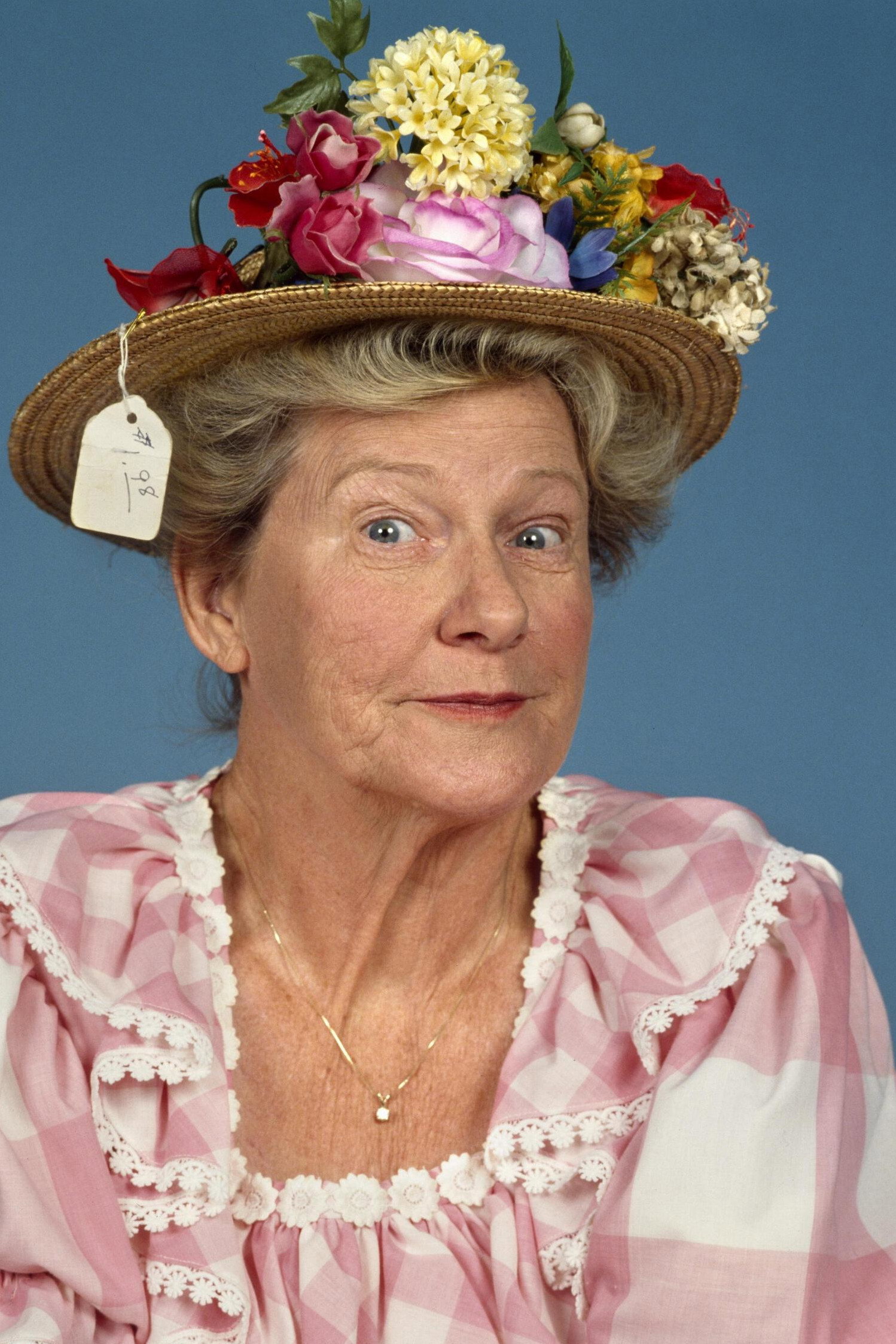
Sarah Ophelia Colley Cannon (October 25, 1912 - March 4, 1996), known professionally as Minnie Pearl, was a country comedienne who appeared at the Grand Ole Opry for more than 50 years (from 1940 to 1991) and on the television show Hee Haw from 1969 to 1991. Sarah Colley was born in Centerville, in Hickman County, Tennessee, about 50 miles (80 km) southwest of Nashville. She was the youngest of the five daughters of a prosperous lumberman in Centerville. She graduated from Ward-Belmont College, at the time Nashville's most prestigious school for young ladies, where her major was theater studies and dance was a particular interest. After graduation she taught dance for several years. Her first professional theatrical job was with the Wayne P. Sewell Production Company, a touring theater company based in Atlanta, for which she produced and directed plays and musicals for local organizations in small towns throughout the southeastern United States. As part of her work with the Sewell company, she made brief appearances at civic organizations to promote the group's shows. She developed her Minnie Pearl routine during this period. While producing an amateur musical comedy in Baileyton, Alabama, she met a mountain woman whose style and talk became the basis for "Cousin Minnie Pearl". Her first stage performance as Minnie Pearl was in 1939 in Aiken, South Carolina. The following year, executives from Nashville radio station WSM-AM saw her perform at a bankers' convention in Centerville and gave her an opportunity to appear on the Grand Ole Opry on November 30, 1940. The success of her debut on the show began an association with the Grand Ole Opry that continued for more than 50 years. Pearl's comedy was gentle satire of rural Southern culture, often called "hillbilly" culture. Pearl always dressed in styleless "down home" dresses and wore a hat with a price tag hanging from it, displaying the price of $1.98. Her catch phrase was "How-w-w-DEE-E-E-E! I'm jes' so proud to be here!" delivered in a loud holler. After she became an established star, her audiences usually shouted "How-w-w-DEE-E-E-E!" back. Pearl told monologues involving her comical 'ne'er-do-well' relatives, notably "Uncle Nabob" and "Brother", who was simultaneously both slow-witted and wise. She usually closed her monologues with the exit line, "I love you so much it hurts!" She also sang comic novelty songs. Pearl's comic material derived heavily from her hometown of Centerville, which in her act she called Grinder's Switch. Grinder's Switch is a community just outside of Centerville that consisted of little more than a railroad switch. Those who knew her recognized that the characters were largely based on real residents of Centerville. So much traffic resulted from fans and tourists looking for Grinder's Switch that the Hickman County Highway Department eventually changed the designation on the "Grinder's Switch" road sign to "Hickman Springs Road." Cannon portrayed Minnie Pearl for many years on television, first on ABC-TV's Ozark Jubilee in the late 1950s; then on the long-running television series Hee Haw, both on CBS-TV and the subsequent syndicated version. Her last regular performances on national television were on Ralph Emery's Nashville Now country-music talk show on the former Nashville Network cable channel. With Emery she performed in a weekly feature, "Let Minnie Steal Your Joke," in the Minnie Pearl character would read jokes submitted by viewers, with prizes for the best joke of the week. Cannon made a cameo appearance in the film Coal Miner's Daughter, in which she appears at the Opry as her Minnie Pearl character.
Maw Culpepper
Elvis and the USS Arizona
Self - Musician (archive footage)
Jeff Foxworthy's Comedy Classics
(archive footage)

Coal Miner's Daughter
Minnie Pearl (uncredited)
Elvis and the USS Arizona
Self - Musician (archive footage)
Jeff Foxworthy's Comedy Classics
(archive footage)
Coal Miner's Daughter
Minnie Pearl (uncredited)
Maw Culpepper


