Umberto Eco
Biography
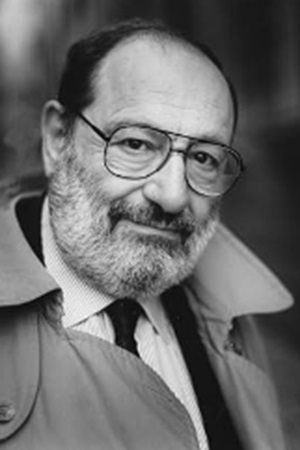
Umberto Eco Knight Grand Cross (born 5 January 1932) is an Italian semiotician, essayist, philosopher, literary critic, and novelist. He is best known for his groundbreaking 1980 novel "Il nome della rosa" (The Name of the Rose), an intellectual mystery combining semiotics in fiction, biblical analysis, medieval studies and literary theory. He has since written further novels, including "Il pendolo di Foucault" (Foucault's Pendulum) and "L'isola del giorno prima" (The Island of the Day Before). His most recent novel "Il cimitero di Praga" (The Prague Cemetery), released in 2010, was a best-seller. Eco has also written academic texts, children's books and many essays. He is founder of the Dipartimento di Comunicazione at the University of the Republic of San Marino, President of the Scuola Superiore di Studi Umanistici, University of Bologna, member of the Accademia dei Lincei (since November 2010) and an Honorary Fellow of Kellogg College, University of Oxford. Biography Eco was born in the city of Alessandria in the region of Piedmont in northern Italy. His father, Giulio, was an accountant before the government called upon him to serve in three wars. During World War II, Umberto and his mother, Giovanna, moved to a small village in the Piedmontese mountainside. Eco received a Salesian education, and he has made references to the order and its founder in his works and interviews. His family name is supposedly an acronym of ex caelis oblatus (Latin: a gift from the heavens), which was given to his grandfather (a foundling) by a city official. He entered the University of Turin in order to take up medieval philosophy and literature, writing his thesis on Thomas Aquinas and earning his Laurea in philosophy in 1954. During his university studies, Eco stopped believing in God and left the Roman Catholic Church. In September 1962, he married Renate Ramge, a German art teacher with whom he has a son and a daughter. He divides his time between an apartment in Milan and a vacation house near Urbino. He has a 30,000 volume library in the former and a 20,000 volume library in the latter. In 1992–1993 Eco was the Norton professor at Harvard University. On May 8, 1993, Eco received an honorary Doctor of Humane Letters from Indiana University at Bloomington in recognition of his over 15 year association with the university's Research Center for Language and Semiotic Studies. Six books that were authored, coauthored, or coedited by Eco were published by the Indiana University Press. Additionally, he frequently collaborated with his friend, Dr. Thomas A. Sebeok, noted semiotician and Distinguished Professor of Linguistics at IU. On May 23, 2002, Eco received an honorary Doctor of Letters from Rutgers University in New Brunswick, New Jersey. In 2009, the University of Belgrade (Serbia) awarded him a honorary doctorate. Eco is a member of the Italian skeptic organization CICAP. Novel: The Name of the Rose Eco employed his education as a medievalist in his first novel "The Name of the Rose" (1980), a historical mystery set in a 14th century monastery. Franciscan friar William of Baskerville, aided by his assistant Adso, a Benedictine novice, investigates a series of murders at a monastery that is to host an important religious debate. The novel contains many direct or indirect metatextual references to other sources, requiring the detective work of the reader to 'solve'. The title is unexplained in the book. As a symbol, the rose is ubiquitous enough to not confer any single meaning. The Name of the Rose was later made into a motion picture starring Sean Connery, F. Murray Abraham, Christian Slater and Ron Perlman which employs the plot rather than the philosophical and historical themes from the novel. for more see: http://en.wikipedia.org/wiki/Umberto_Eco
Umberto Eco: La Biblioteca del Mondo
Self (archive footage)
Girlfriend in a Coma
Self
La Maison de la Radio
Self
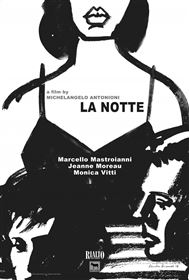
La Notte
Man at the Party (uncredited)
Umberto Eco: La Biblioteca del Mondo
Self (archive footage)
La Maison de la Radio
Self
Girlfriend in a Coma
Self
La Notte
Man at the Party (uncredited)


