Nikita Khrushchev
Biography
Nikita Sergeyevich Khrushchev (April 15, 1894 – September 11, 1971) Led the Soviet Union during part of the Cold War. He served as First Secretary of the Communist Party of the Soviet Union from 1953 to 1964, and as Chairman of the Council of Ministers, or Premier, from 1958 to 1964. Khrushchev was responsible for the partial de-Stalinization of the Soviet Union, for backing the progress of the early Soviet space program, and for several relatively liberal reforms in areas of domestic policy. Khrushchev's party colleagues removed him from power in 1964, replacing him with Leonid Brezhnev as First Secretary and Alexei Kosygin as Premier. Khrushchev was born in the Russian village of Kalinovka in 1894, close to the present-day border between Russia and Ukraine. He was employed as a metalworker in his youth, and during the Russian Civil War was a political commissar. With the help of Lazar Kaganovich, he worked his way up the Soviet hierarchy. He supported Joseph Stalin's purges, and approved thousands of arrests. In 1939, Stalin sent him to govern Ukraine, and he continued the purges there. During what was known in the Soviet Union as the Great Patriotic War (Eastern Front of World War II), Khrushchev was again a commissar, serving as an intermediary between Stalin and his generals. Khrushchev was present at the bloody defense of Stalingrad, a fact he took great pride in throughout his life. After the war, he returned to Ukraine before being recalled to Moscow as one of Stalin's close advisers. In the power struggle triggered by Stalin's death in 1953, Khrushchev, after several years, emerged victorious. On February 25, 1956, at the 20th Party Congress, he delivered the "Secret Speech," denouncing Stalin's purges and ushering in a less repressive era in the Soviet Union. His domestic policies, aimed at bettering the lives of ordinary citizens, were often ineffective, especially in the area of agriculture. Hoping eventually to rely on missiles for national defense, Khrushchev ordered major cuts in conventional forces. Despite the cuts, Khrushchev's rule saw the tensest years of the Cold War, culminating in the Cuban Missile Crisis. Some of Khrushchev's policies were seen as erratic, particularly by his emerging rivals, who quietly rose in strength and deposed him in October 1964. He did not suffer the deadly fate of some previous losers of Soviet power struggles, but was pensioned off with an apartment in Moscow and a dacha in the countryside. His lengthy memoirs were smuggled to the West and published in part in 1970. Khrushchev died in 1971 of heart disease. Kalinovka was a peasant village; Khrushchev's teacher, Lydia Shevchenko later stated that she had never seen a village as poor as Kalinovka had been. In 1908, Sergei Khrushchev moved to the Donbas city of Yuzovka; fourteen-year-old Nikita followed later that year, while Ksenia Khrushcheva and her daughter came after. When World War I broke out in 1914, Khrushchev, as a skilled metal worker, was exempt from conscription. Employed by a workshop which serviced ten mines, Khrushchev was involved in several strikes demanding higher pay, better working conditions, and an end to the war. After the abdication of Tsar Nicholas II in 1917, the new Russian Provisional Government in Petrograd had little influence over Ukraine. Khrushchev was elected to the worker's council (or soviet) in Rutchenkovo, and in May he became its chairman. In March 1918, as the Bolshevik government concluded a separate peace with the Central Powers, the Germans occupied the Donbas and Khrushchev fled to Kalinovka. In late 1918 or early 1919 he was mobilized into the Red Army as a political commissar. The wars had caused widespread devastation and famine, and one of the victims of the hunger and disease was Khrushchev's wife, Yefrosinia, who died of typhus in Kalinovka while Khrushchev was in the army. The commissar returned for the funeral and, loyal to his Bolshevik principles, refused to allow his wife's coffin to enter the local church. With the only way into the churchyard through the church, he had the coffin lifted and passed over the fence into the burial ground, shocking the village. Through the intervention of a friend, Khrushchev was assigned in 1921 as assistant director for political affairs for the Rutchenkovo mine in the Donbas region, where he had previously worked. Khrushchev was highly successful at the Rutchenkovo mine, and in mid-1922 he was offered the directorship of the nearby Pastukhov mine. However, he refused the offer, seeking to be assigned to the newly established technical college (tekhnikum) in Yuzovka, though his superiors were reluctant to let him go. As he had only four years of formal schooling, he applied to the training program (rabfak) attached to the tekhnikum that was designed to bring undereducated students to high-school level, a prerequisite for entry into the tekhnikum. In 1922, Khrushchev met and married his second wife, Marusia, whose maiden name is unknown. The two soon separated, though Khrushchev helped Marusia in later years, especially when Marusia's daughter by a previous relationship suffered a fatal illness. Soon after the abortive marriage, Khrushchev met Nina Petrovna Kukharchuk, a well-educated Party organizer and daughter of well-to-do Ukrainian peasants. In mid-1925, Khrushchev was appointed Party secretary of the Petrovo-Marinsky raikom, or district, near Stalino. The raikom was about 400 square miles (1,000 km2) in area, and Khrushchev was constantly on the move throughout his domain, taking an interest in even minor matters. Kaganovich protégé Khrushchev met Lazar Kaganovich as early as 1917. In 1925, Kaganovich became Party head in Ukraine In 1929, Khrushchev again sought to further his education, following Kaganovich (now in the Kremlin as a close associate of Stalin) to Moscow and enrolling in the Stalin Industrial Academy. Khrushchev never completed his studies there, but his career in the Party flourished. While head of the Moscow city organization, Khrushchev superintended construction of the Moscow Metro, a highly expensive undertaking, with Kaganovich in overall charge. Faced with an already-announced opening date of November 7, 1934, Khrushchev took considerable risks in the construction and spent much of his time down in the tunnels. When the inevitable accidents did occur, they were depicted as heroic sacrifices in a great cause. The Metro did not open until May 1, 1935, but Khrushchev received the Order of Lenin for his role in its construction. Involvement in purges Stalin's office records show meetings at which Khrushchev was present as early as 1932. The two increasingly built a good relationship. Khrushchev greatly admired the dictator and treasured informal meetings with him and invitations to Stalin's dacha, while Stalin felt warm affection for his young subordinate. Beginning in 1934, Stalin began a campaign of political repression known as the Great Purge, during which millions of people were executed or sent to the Gulag. Central to this campaign were Moscow Trials, a series of show trials of the purged top leaders of the party and the military. In 1936, as the trials proceeded, Khrushchev expressed his vehement support: Everyone who rejoices in the successes achieved in our country, the victories of our party led by the great Stalin, will find only one word suitable for the mercenary, fascist dogs of the Trotskyite-Zinovievite gang. That word is execution. Khrushchev assisted in the purge of many friends and colleagues in Moscow oblast. Party leaders were given numerical quotas of "enemies" to be turned in and arrested. Khrushchev had no reason to think himself immune from the purges, and in 1937, confessed his own 1923 dalliance with Trotskyism to Kaganovich, who, according to Khrushchev, "blanched" (for his protégé's sins could affect his own standing) and advised him to tell Stalin. The dictator took the confession in his stride, and, after initially advising Khrushchev to keep it quiet, suggested that Khrushchev tell his tale to the Moscow party conference. Khrushchev did so, to applause, and was immediately reelected to his post. In late 1937, Stalin appointed Khrushchev as head of the Communist Party in Ukraine, and Khrushchev duly left Moscow for Kiev, again the Ukrainian capital, in January 1938. Biographer William Taubman suggests that, since Khrushchev was again unsuccessfully denounced while in Kiev, he must have known that some of the denunciations were not true and that innocent people were suffering. When Soviet troops, pursuant to the Molotov-Ribbentrop Pact, invaded the eastern portion of Poland on September 17, 1939, Khrushchev accompanied the troops at Stalin's direction. A large number of ethnic Ukrainians lived in the invaded area, much of which today forms the western portion of Ukraine. Many inhabitants therefore initially welcomed the invasion, though they hoped that they would eventually become independent. Khrushchev's role was to ensure that the occupied areas voted for union with the USSR. Through a combination of propaganda, deception as to what was being voted for, and outright fraud, the Soviets ensured that their new territories would elect assemblies which would unanimously petition for union with the USSR. When the new assemblies did so, their petitions were granted by the USSR Supreme Soviet, and Western Ukraine became a part of the Ukrainian Soviet Socialist Republic (SSR) on November 1, 1939. When the Germans invaded the USSR, in June 1941, Khrushchev was still at his post in Kiev. Khrushchev stated in his memoirs, "But let me return to the enemy breakthrough in the Kiev area, the encirclement of our group, and the destruction of the 37th Army. Later, the Fifth Army also perished ... All of this was senseless, and from the military point of view, a display of ignorance, incompetence, and illiteracy. ... There you have the result of not taking a step backward. We were unable to save these troops because we didn't withdraw them, and as a result we simply lost them. ... And yet it was possible to allow this not to happen. In 1942, Khrushchev was on the Southwest Front, and he and Timoshenko proposed a massive counteroffensive in the Kharkov area. Stalin approved only part of the plan, but 640,000 Red Army soldiers would still become involved in the offensive. The Germans, however, had deduced that the Soviets were likely to attack at Kharkov, and set a trap. Beginning on May 12, 1942, the Soviet offensive initially appeared successful, but within five days the Germans had driven deep into the Soviet flanks, and the Red Army troops were in danger of being cut off. Stalin refused to halt the offensive, and the Red Army divisions were soon encircled by the Germans. The USSR lost about 267,000 soldiers, including more than 200,000 men captured, and Stalin demoted Timoshenko and recalled Khrushchev to Moscow. While Stalin hinted at arresting and executing Khrushchev, he allowed the commissar to return to the front by sending him to Stalingrad. Khrushchev reached the Stalingrad Front in August 1942, soon after the start of the battle for the city. Soon after Stalingrad, Khrushchev met with personal tragedy, as his son Leonid, a fighter pilot, was apparently shot down and killed in action on March 11, 1943. The circumstances of Leonid's death remain obscure and controversial, After Uranus forced the Germans into retreat, Khrushchev served in other fronts of the war. He was attached to Soviet troops at the Battle of Kursk, in July 1943, which turned back the last major German offensive on Soviet soil. According to Khrushchev biographer William Tompson, it is difficult to assess Khrushchev's war record, since he most often acted as part of a military council, and it is not possible to know the extent to which he influenced decisions, rather than signing off on the orders of military officers. However, Tompson points to the fact that the few mentions of Khrushchev in military memoirs published during the Brezhnev era were generally favorable, at a time when it was "barely possible to mention Khrushchev in print in any context". Almost all of Ukraine had been occupied by the Germans, and Khrushchev returned to his domain in late 1943 to find devastation. Ukraine's industry had been destroyed, and agriculture faced critical shortages. Even though millions of Ukrainians had been taken to Germany as workers or prisoners of war, there was insufficient housing for those who remained. Khrushchev sought to reconstruct Ukraine, but also desired to complete the interrupted work of imposing the Soviet system on it, though he hoped that the purges of the 1930s would not recur. In an effort to increase agricultural production, the kolkhozes (collective farms) were empowered to expel residents who were not pulling their weight. Kolkhoz leaders used this as an excuse to expel their personal enemies, invalids, and the elderly, and nearly 12,000 people were sent to the eastern parts of the Soviet Union. Khrushchev viewed this policy as very effective, and recommended its adoption elsewhere to Stalin. The war years of 1944 and 1945 had seen poor harvests, and 1946 saw intense drought strike Ukraine and Western Russia. Despite this, collective and state farms were required to turn over 52% of the harvest to the government. Soon after Kaganovich arrived in Kiev, Khrushchev fell ill, and was barely seen until September 1947. In his memoirs, Khrushchev indicates he had pneumonia; some biographers have theorized that Khrushchev's illness was entirely political, out of fear that his loss of position was the first step towards downfall and demise. Khrushchev's final years in Ukraine were generally peaceful, with industry recovering, In his memoirs, Khrushchev spoke highly of Ukraine, where he governed for over a decade: I'll say that the Ukrainian people treated me well. I recall warmly the years I spent there. This was a period full of responsibilities, but pleasant because it brought satisfaction ... But far be it from me to inflate my significance. The entire Ukrainian people was exerting great efforts ... I attribute Ukraine's successes to the Ukrainian people as a whole. I won't elaborate further on this theme, but in principle it's very easy to demonstrate. I'm Russian myself, and I don't want to offend the Russians. Khrushchev attributed his recall to Moscow to mental disorder on the part of Stalin, who feared conspiracies in Moscow matching those which the ruler believed to have occurred in the fabricated Leningrad case, in which many of that city's Party officials had been falsely accused of treason. At this time, the aging leader rarely called Politburo meetings. Instead, much of the high-level work of government took place at dinners hosted by Stalin. These sessions, which Beria, Malenkov, Khrushchev, Kaganovich, Kliment Voroshilov, Vyacheslav Molotov, and Nikolai Bulganin, who comprised Stalin's inner circle, attended, began with showings of cowboy movies favored by Stalin. In 1950, Khrushchev began a large-scale housing program for Moscow. A large part of the housing was in the form of five- or six-story apartment buildings, which became ubiquitous throughout the Soviet Union; many remain in use today. In his new positions, Khrushchev continued his kolkhoz consolidation scheme, decreasing the number of collective farms in Moscow province by about 70%. This resulted in farms that were too large for one chairman to manage effectively. On March 1, 1953, Stalin suffered a massive stroke, apparently on rising after sleep. Stalin had left orders not to be disturbed, and it was twelve hours until his condition was discovered. Even as terrified doctors attempted treatment, Khrushchev and his colleagues engaged in intense discussion as to the new government. On March 5, Stalin died. As Khrushchev and other high officials stood weeping by Stalin's bedside, Beria raced from the room, shouting for his car. Khrushchev reflected on Stalin in his memoirs: Stalin called everyone who didn't agree with him an "enemy of the people." He said that they wanted to restore the old order, and for this purpose, "the enemies of the people" had linked up with the forces of reaction internationally. As a result, several hundred thousand honest people perished. Everyone lived in fear in those days. Everyone expected that at any moment there would be a knock on the door in the middle of the night and that knock on the door would prove fatal ... On March 6, 1953, Stalin's death was announced, as was the new leadership. Malenkov was the new Chairman of the Council of Ministers, with Beria (who consolidated his hold over the security agencies), Kaganovich, Bulganin, and former Foreign Minister Vyacheslav Molotov as first vice-chairmen. Those members of the Presidium of the Central Committee who had been recently promoted by Stalin were demoted. Khrushchev was relieved of his duties as Party head for Moscow to concentrate on unspecified duties in the Party's Central Committee. Even before Stalin had been laid to rest, Beria launched a lengthy series of reforms which rivalled those of Khrushchev during his period of power and even those of Mikhail Gorbachev a third of a century later. On June 26, 1953 Beria was arrested at a Presidium meeting, following extensive military preparations by Khrushchev and his allies. Beria was tried in secret, and executed in December 1953 with five of his close associates. The execution of Beria proved to be the last time the loser of a top-level power struggle in the USSR paid with his life. The power struggle in the Presidium was not resolved by the elimination of Beria. Malenkov's power was in the central state apparatus, which he sought to extend through reorganizing the government, giving it additional power at the expense of the Party. He also sought public support by lowering retail prices and lowering the level of bond sales to citizens, which had long been effectively obligatory. Khrushchev, on the other hand, with his power base in the Party, sought to both strengthen the Party and his position within it. While, under the Soviet system, the Party was to be preeminent, it had been greatly drained of power by Stalin, who had given much of that power to himself and to the Politburo (later, to the Presidium). Khrushchev saw that with the Presidium in conflict, the Party and its Central Committee might again become powerful. Khrushchev presented himself as a down-to-earth activist prepared to take up any challenge, contrasting with Malenkov who, though sophisticated, came across as colorless. At a Central Committee meeting in January 1955, Malenkov was accused of involvement in atrocities, and the committee passed a resolution accusing him of involvement in the Leningrad case, and of facilitating Beria's climb to power. At a meeting of the mostly ceremonial Supreme Soviet the following month, Malenkov was demoted in favor of Bulganin, to the surprise of Western observers. After the demotion of Malenkov, Khrushchev and Molotov initially worked together well, and the longtime foreign minister even proposed that Khrushchev, not Bulganin, replace Malenkov as premier. By the end of 1955, thousands of political prisoners had returned home, and told their experiences of the gulag labor camps. The 20th Party Congress opened on February 14, 1956. In his opening words in his initial address, Khrushchev denigrated Stalin by asking delegates to rise in honor of the communist leaders who had died since the last congress, whom he named, equating Stalin with the drunken Klement Gottwald and the little-known Kyuichi Tokuda. Khrushchev told the delegates, It is here that Stalin showed in a whole series of cases his intolerance, his brutality, and his abuse of power ... he often chose the path of repression and physical annihilation, not only against actual enemies, but also against individuals who had not committed any crimes against the party or the Soviet Government. The Secret Speech, while it did not fundamentally change Soviet society, had wide-ranging effects. The speech was a factor in unrest in Poland and revolution in Hungary later in 1956, and Stalin defenders led four days of rioting in his native Georgia in June, calling for Khrushchev to resign and Molotov to take over. The term "Secret Speech" proved to be an utter misnomer. While the attendees at the Speech were all Soviet, Eastern European delegates were allowed to hear it the following night, read slowly to allow them to take notes. By March 5, copies were being mailed throughout the Soviet Union, marked "not for the press" rather than "top secret". An official translation appeared within a month in Poland; the Poles printed 12,000 extra copies, one of which soon reached the West. The anti-Khrushchev minority in the Presidium was augmented by those opposed to Khrushchev's proposals to decentralize authority over industry, which struck at the heart of Malenkov's power base. During the first half of 1957, Malenkov, Molotov, and Kaganovich worked to quietly build support to dismiss Khrushchev. At a June 18 Presidium meeting at which two Khrushchev supporters were absent, the plotters moved that Bulganin, who had joined the scheme, take the chair, and proposed other moves which would effectively demote Khrushchev and put themselves in control. Khrushchev objected on the grounds that not all Presidium members had been notified, an objection which would have been quickly dismissed had Khrushchev not held firm control over the military, through Minister of Defense Marshal Zhukov, and the security departments. Lengthy Presidium meetings took place, continuing over several days. As word leaked of the power struggle, members of the Central Committee, which Khrushchev controlled, streamed to Moscow, many flown there aboard military planes, and demanded to be admitted to the meeting. While they were not admitted, there were soon enough Central Committee members in Moscow to call an emergency Party Congress, which effectively forced the leadership to allow a session of the Central Committee. At that meeting, the three main conspirators were dubbed the Anti-Party Group, accused of factionalism and complicity in Stalin's crimes. The three were expelled from the Central Committee and Presidium, as was former Foreign Minister and Khrushchev client Dmitri Shepilov who joined them in the plot. Molotov was sent as Ambassador to Mongolia; the others were sent to head industrial facilities and institutes far from Moscow. Marshal Zhukov was rewarded for his support with full membership in the Presidium, but Khrushchev feared his popularity and power. In October, the defense minister was sent on a tour of the Balkans, as Khrushchev arranged a Presidium meeting to dismiss him. Zhukov learned what was happening, and hurried back to Moscow, only to be formally notified of his dismissal. At a Central Committee meeting several weeks later, not a word was said in Zhukov's defense. After assuming power, Khrushchev allowed a modest amount of freedom in the arts. Vladimir Dudintsev's Not by Bread Alone, Khrushchev believed that the USSR could match the West's living standards, and was not afraid to allow Soviet citizens to see Western achievements. In 1962, Khrushchev, impressed by Aleksandr Solzhenitsyn's One Day in the Life of Ivan Denisovich, persuaded the Presidium to allow publication. Under Khrushchev, the special tribunals operated by security agencies were abolished. These tribunals (known as troikas), had often ignored laws and procedures. Under the reforms, no prosecution for a political crime could be brought even in the regular courts unless approved by the local Party committee. This rarely happened; there were no major political trials under Khrushchev, and at most several hundred political prosecutions overall. Instead, other sanctions were imposed on dissidents, including loss of job or university place, or expulsion from the Party. During Khrushchev's rule, forced hospitalization for the "socially dangerous" was introduced. In 1958, Khrushchev opened a Central Committee meeting to hundreds of Soviet officials; some were even allowed to address the meeting. For the first time, the proceedings of the Committee were made public in book form; a practice which was continued at subsequent meetings. This openness, however, actually allowed Khrushchev greater control over the Committee, since any dissenters would have to make their case in front of a large, disapproving crowd. In 1962, Khrushchev divided oblast (province) level Party committees into two parallel structures, one for industry and one for agriculture. This was unpopular among Party apparatchiks, and led to confusions in the chain of command, as neither committee secretary had precedence over the other. As there were limited numbers of Central Committee seats from each oblast, the division set up the possibility of rivalry for office between factions, and, according to Medvedev, had the potential for beginning a two-party system. Since the 1940s, Khrushchev had advocated the cultivation of corn in the Soviet Union. Khrushchev sought to abolish the Machine-Tractor Stations (MTS) which not only owned most large agricultural machines such as combines and tractors, but also provided services such as plowing, and transfer their equipment and functions to the kolkhozes and sovkhozes (state farms). One adviser to Khrushchev was Trofim Lysenko, who promised greatly increased production with minimal investment. Such schemes were attractive to Khrushchev, who ordered them implemented. Lysenko managed to maintain his influence under Khrushchev despite repeated failures; as each proposal failed, he advocated another. Lysenko's influence greatly retarded the development of genetic science in the Soviet Union. In June 1962, food prices were raised, particularly on meat and butter (by 25–30%). This caused public discontent. In the southern Russian city of Novocherkassk (Rostov Region) this discontent escalated to a strike and a revolt against the authorities. The revolt was put down by the military. According to Soviet official accounts, 22 people were killed and 87 wounded. In addition, 116 demonstrators were convicted of involvement and seven of them executed. Information about the revolt was completely suppressed in the USSR, but spread through Samizdat and damaged Khrushchev's reputation in the West. Drought struck the Soviet Union in 1963; the harvest of 107,500,000 short tons (97,500,000 t) of grain was down from a peak of 134,700,000 short tons (122,200,000 t) in 1958. While visiting the United States in 1959, Khrushchev was greatly impressed by the agricultural education program at Iowa State University, and sought to imitate it in the Soviet Union. At the time, the main agricultural college in the USSR was in Moscow, and students did not do the manual labor of farming. Khrushchev proposed to move the programs to rural areas. He was unsuccessful, due to resistance from professors and students, who never actually disagreed with the premier, but who did not carry out his proposals. Khrushchev founded several academic towns, such as Akademgorodok. The premier believed that Western science flourished because many scientists lived in university towns such as Oxford, isolated from big city distractions, and had pleasant living conditions and good pay. He sought to duplicate those conditions in the Soviet Union. Khrushchev's attempt was generally successful, though his new towns and scientific centers tended to attract younger scientists, with older ones unwilling to leave Moscow or Leningrad. Khrushchev also proposed to restructure Soviet high schools. While the high schools provided a college preparatory curriculum, in fact few Soviet youths went on to university. Khrushchev wanted to shift the focus of secondary schools to vocational training: students would spend much of their time at factory jobs or in apprenticeships and only a small part at the schools. While the vocational proposal would not survive Khrushchev's downfall, a longer-lasting change was a related establishment of specialized high schools for gifted students or those wishing to study a specific subject. Foreign and defense policies When Khrushchev took control, the outside world still knew little of him, and initially was not impressed by him. Short, heavyset, and wearing ill-fitting suits, he "radiated energy but not intellect", and was dismissed by many as a buffoon who would not last long. Khrushchev biographer Tompson described the mercurial leader: He could be charming or vulgar, ebullient or sullen, he was given to public displays of rage (often contrived) and to soaring hyperbole in his rhetoric. But whatever he was, however he came across, he was more human than his predecessor or even than most of his foreign counterparts, and for much of the world that was enough to make the USSR seem less mysterious or menacing. Khrushchev sought to find a lasting solution to the problem of a divided Germany and of the enclave of West Berlin deep within East German territory. In November 1958, calling West Berlin a "malignant tumor", he gave the United States, United Kingdom and France six months to conclude a peace treaty with both German states and the Soviet Union. If one was not signed, Khrushchev stated, the Soviet Union would conclude a peace treaty with East Germany. This would leave East Germany, which was not a party to treaties giving the Western Powers access to Berlin, in control of the routes to the city. Khrushchev, however, repeatedly extended the deadline. Khrushchev sought to eliminate many conventional weapons, and defend the Soviet Union with missiles. The Soviets had few operable ICBMs; in spite of this Khrushchev publicly boasted of the Soviets' missile programs, stating that Soviet weapons were varied and numerous. The First Secretary hoped that public perception that the Soviets were ahead would result in psychological pressure on the West and political concessions. In 1959, during Nixon's visit to the Soviet Union, Khrushchev's U.S. visit resulted in an informal agreement with U.S. president Dwight Eisenhower that there would be no firm deadline over Berlin, but that there would be a four-power summit to try to resolve the issue, and the premier left the U.S. to general good feelings. Khrushchev returned from the U.S. convinced that he had achieved a strong personal relationship with Eisenhower (who in fact was unimpressed by the Soviet leader) and that he could achieve détente with the Americans. A constant irritant in Soviet–U.S. relations was the overflight of the Soviet Union by American U-2 spy aircraft. On April 9, 1960, the U.S. resumed such flights after a lengthy break. The Soviets had protested the flights in the past, but had been ignored by Washington. Content in what he thought was a strong personal relationship with Eisenhower, Khrushchev was confused and angered by the flights' resumption, and concluded that they had been ordered by CIA Director Allen Dulles without the U.S. President's knowledge. On May 1, a U-2 was shot down; its pilot, Francis Gary Powers captured alive.

The Spy Who Fell to Earth
Himself (archive footage)
State Funeral
Self (archive footage)
The KGB Connections
Himself (archive footage)
Himself
Self (archive footage)
El Che
Self (archive footage)
Berlin Wall: The Night the Iron Curtain Closed
Self
The Neutron Bomb
Self - Former Premier of the Soviet Union
Fidel Castro: Life for the Revolution
Self
Stalin and the Katyn Massacre
Self
Self (archive footage)
Soundtrack to a Coup d'Etat
(archive footage)
JFK: What the Doctors Saw
Self - Premier of the Soviet Union (archive footage)
Uncle Tom II: An American Odyssey
Self (archive footage)
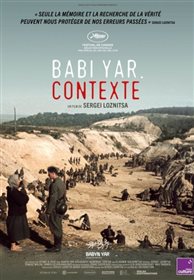
Babi Yar. Context
Self - 1st Secretary - Communist Party of Ukraine (archive footage) (uncredited)
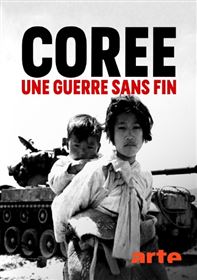
Corée, une guerre sans fin
Self (archive footage)
Stalin and the Katyn Massacre
Self
State Funeral
Self (archive footage)
The Spy Who Fell to Earth
Himself (archive footage)
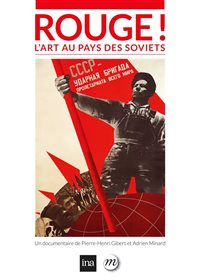
Red! Art in the Land of Soviets
Self (archive footage)
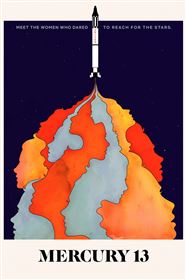
Mercury 13
Himself (archive footage)
El Che
Self (archive footage)
The Young Karl Marx
Himself (archive footage)
Berlin Wall: The Night the Iron Curtain Closed
Self
The Saturn V Story
Self (archive footage)
Lee Harvey Oswald: 48 Hours to Live
Self (archive footage)

Ivo Livi genannt Yves Montand
Self (archive footage)
A Wall in Berlin
Self (archive footage) (uncredited)
Cosmonaut
Self (archive footage)
An American Affair
Self
La rabbia di Pasolini
Self (archive footage)
Expelled: No Intelligence Allowed
Himself (archive footage) (uncredited)
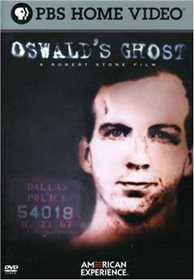
Oswald's Ghost
Himself (archive footage)
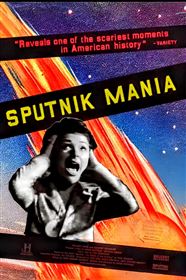
Sputnik Mania
Himself (archive footage)

The Wonder of It All
Himself (archive footage)
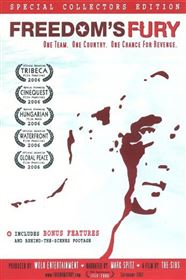
Freedom's Fury
Self (archive footage)
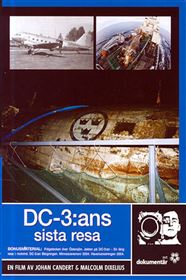
DC3:ans sista resa
Self (archive footage)
Fidel Castro: Life for the Revolution
Self
The Fog of War
Himself (archive footage) (uncredited)
Germany: Behind the Wall
Self
Naqoyqatsi
Self (archive footage) (uncredited)
Self (archive footage) (uncredited)
K-19: Doomsday Submarine
Self
JFK: Assassination Files
Himself (archive footage)
Blast from the Past
Himself (Shakes Fist at the U.N.) (archive footage) (uncredited)
East Side Story
Himself (archive footage) (uncredited)
Trinity & Beyond: The Atomic Bomb Movie
Himself (archive footage)
The Century of Warfare
Himself (unknown episodes)
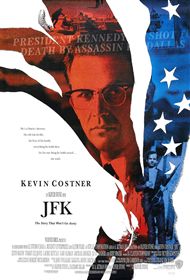
JFK
Self (archive footage) (uncredited)
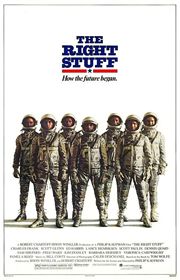
The Right Stuff
Himself - Embracing Gagarin (archive footage) (uncredited)
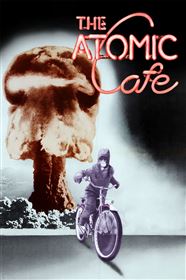
The Atomic Cafe
Self (archive footage)
The KGB Connections
Himself (archive footage)
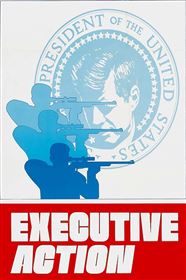
Executive Action
Himself (applauds Test Ban Treaty) (archive footage) (uncredited)
I Due Kennedy
Self (archive footage)
La belle vie
Self (archive footage) (uncredited)
Frühstück im Doppelbett
Himself (archive footage) (uncredited)
La Rabbia
Himself (archive footage)
The Seven Deadly Sins
Self (segment "La colère") (archive footage) (uncredited)
Himself
The Neutron Bomb
Self - Former Premier of the Soviet Union


