Teddy Kollek
Biography
Early years Teddy Kollek was born in Nagyvázsony, 120 km from Budapest, Austria-Hungary. His parents named him after Theodor Herzl. Growing up in Vienna, Kollek came to share his father Alfréd’s Zionist convictions. In 1935, three years before the Nazis seized power in Austria, the Kollek family immigrated to Palestine, then under British mandate. In 1937, he was one of the founders of Kibbutz Ein Gev, on the shore of Lake Kinneret.[1] That same year he married Tamar Schwarz. They had two children, a son, Amos (born in 1937), and a daughter, Osnat. In the 1940s, Kollek was an informant for the British Mandate against right-wing Jewish underground groups (Irgun and Stern Gang) and was instrumental in the capture of arms and several top men from these organizations.[3] During World War II, Kollek tried to represent Jewish interests in Europe on behalf of the Jewish Agency. At the outbreak of the war he succeeded in persuading Adolf Eichmann (then a minor Nazi official) to release 3,000 young Jewish concentration camp inmates and transfer them to England. In 1947—48, he represented the Haganah in Washington, where he assisted in acquiring ammunition for Israel’s then-fledgling army. Kollek became a close ally of David Ben-Gurion, working in the latter’s government from 1952 until 1965.[4] [edit] Mayor of Jerusalem In 1965 Teddy Kollek succeeded Mordechai Ish-Shalom as Mayor of Jerusalem. On his motivations for seeking the mayor’s office in Jerusalem, Kollek once recalled:[5] I got into this by accident[...] I was bored. When the city was united, I saw this as an historic occasion. To take care of it and show better care than anyone else ever has is a full life purpose. I think Jerusalem is the one essential element in Jewish history. A body can live without an arm or a leg, not without the heart. This is the heart and soul of it. During his tenure Jerusalem developed into a modern city, especially after its reunification in 1967[1] He was often called “the greatest builder of Jerusalem since Herod.”[6] Kollek was re-elected five times, in 1969, 1973, 1978, 1983, and 1989, serving 28 years as mayor of Jerusalem.[7] In a reluctant seventh bid for mayor in 1993, Kollek, aged 82, lost to Likud candidate Ehud Olmert. On November 13, 1972, Kollek appeared alongside New York Mayor John Lindsay on the Tonight Show with Johnny Carson. [edit] Relationship with the Arab community In the Six-Day War of 1967, East Jerusalem, which had been under Jordanian control since 1948, was taken over by Israel. As mayor of a newly united Jerusalem, Kollek’s approach toward her Arab inhabitants was governed by pragmatism. “I’d love the city to be empty of Arabs, but since they are here we need to serve them, because if we treat them badly they will hate us more,”[5] he was once quoted as saying. Within hours of the transfer of authority, he arranged for the provision of milk for Arab children. Some Israelis considered him pro-Arab.[5] Kollek advocated religious tolerance and made numerous efforts to reach out to the Arab community during his tenure. Muslims continued to have access to al-Aqsa Mosque and al-Haram ash-Sharif (the Temple Mount) for worship, and Kollek criticized Jews for establishing new neighborhoods in contentious parts of the city. On one occasion, he protested outside the office of Prime Minister Yitzhak Shamir for this reason. Kollek’s views toward the annexation of East Jerusalem softened after leaving office, he himself conceding that self-rule for the Palestinian community in East Jerusalem should be considered.[8] The status of East Jerusalem has remained controversial up to the present.

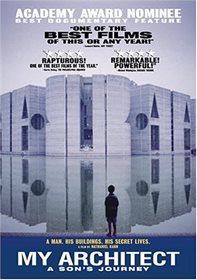
My Architect
Himself
My Architect
Himself


