

Kenji Mizoguchi's Fallen Women: Eclipse Series 13
4h 59m · 10/21/2008
Description
Over the course of a three-decade, more than eighty film career, master cineaste Kenji Mizoguchi (Ugetsu, Sansho the Bailiff) would return again and again to one abiding theme: the plight of women in Japanese society. In these four lacerating works of social consciousness—two prewar (Osaka Elegy, Sisters of the Gion), two postwar (Women of the Night, Street of Shame)—Mizoguchi introduces an array of compelling female protagonists, crushed or resilient, who are forced by their conditions and culture into compromising positions. With Mizoguchi’s visual daring and eloquence, these films are as cinematically thrilling as they are politically rousing. OSAKA ELEGY (Naniwa ereji) Switchboard operator Ayako (Isuzu Yamada) agrees to enter into an affair with her married boss after he promises to support her and her father - setting her off on a seemingly irreversible downward spiral. SISTERS OF THE GION (Gion no shimai) Two Geisha sisters - one modern-minded, the other staunchly traditional - disagree over how to deal with the men controlling their lives and livellihoods in Mizoguchi's early masterpiece. WOMEN OF THE NIGHT (Yoru no onnatachi) This ragged, searing melodrama about postwar degradation in Japan centers on three women, abandoned by society, whose only survival option is to compromise their bodies and souls. STREET OF SHAME (Akasen chitai) In a brothel in Tokyo’s red-light district, a group of working women, their profession on the verge of being outlawed, deal with life's disappointments, large and small. This beautiful, humane film was Mizoguchi's last.
Release Country
United StatesBarcode
715515033527Release Date
10/21/2008Media Type
MovieDigital Copy
Not IncludedVideo Format
NTSCCover Type
BoxDiscs

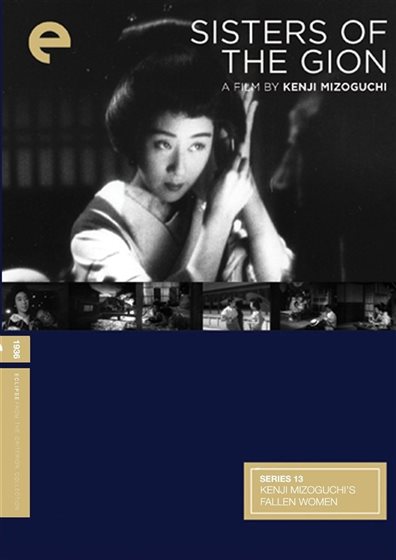
Sisters of the Gion

Osaka Elegy

Women of the Night

Street of Shame


