The Killer Shrews/I Bury the Living
3/20/2001
Description
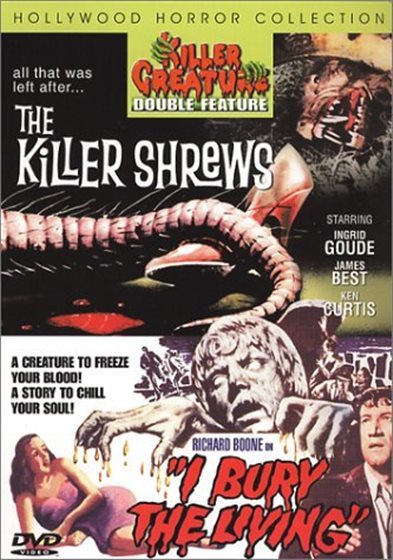
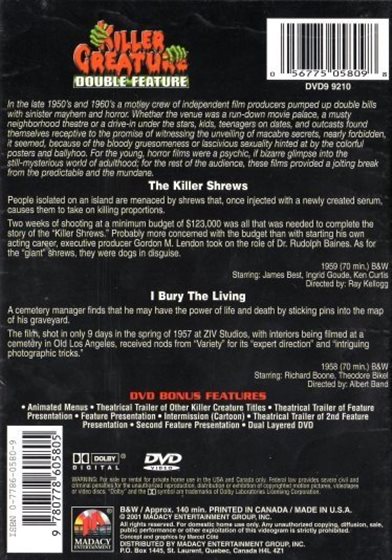
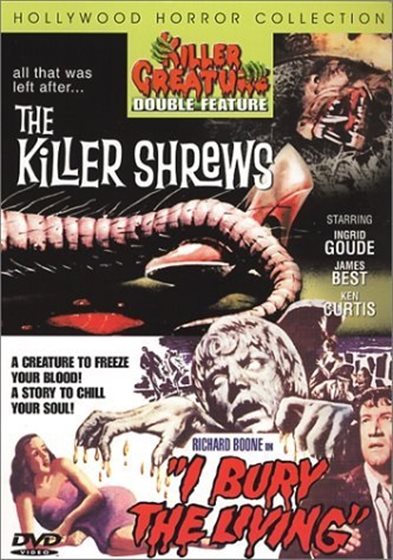
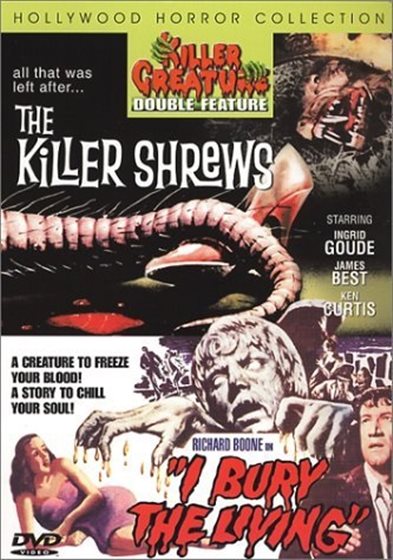
In the late 1950's and 1960's a motley crew of independent movie producers pumped up double bills with sinister mayhem and horror. Whether the venue was a run-down movie palace, a musty neighborhood theater or a drive-in under the stars, kids, teenagers on dates, and outcasts found themselves receptive to the promise of witnessing the unveiling of macabre secrets, nearly forbidden, it seemed, because of the bloody gruesomeness or lascivious sexuality hinted at by the colorful posters and ballyhoo. For the young, horror films were a psychic, if bizarre glimpse into the still mysterious world of adulthood; for the rest of the audience, these films provided a jolting break from the predictable and the mundane. The Killer Shrews People isolated on an island are menaced by shrews that, once injected with a newly created serum, causes them to take on killing proportions. Two weeks of shooting at a minimum budget of $123,000 was all that was needed to complete the story of the "Killer Shrews". Probably more concerned with the budget then starting his own acing career, executive producer Gordon M. Lendon took on the role of Dr. Rudolph Baines. As for the giant shrews, they were dogs in disguise. I Bury The Living A cemetery manager finds that he may have the power of life and death by sticking pins into the map of his graveyard. The film shot in only 9 days in the spring of 1957 at ZIV Studios, with interiors being filmed at a cemetery in Old Los Angeles, received nods from "Variety" for it's "expert direction" and "intriguing photographic tricks".
Release Country
United StatesBarcode
056775058098Release Date
3/20/2001Media Type
MovieVideo Format
NTSCDiscs

I Bury the Living
The Killer Shrews


