Fata Morgana (1971)
Documentary · 1h 16m · 7/29/2014



Description
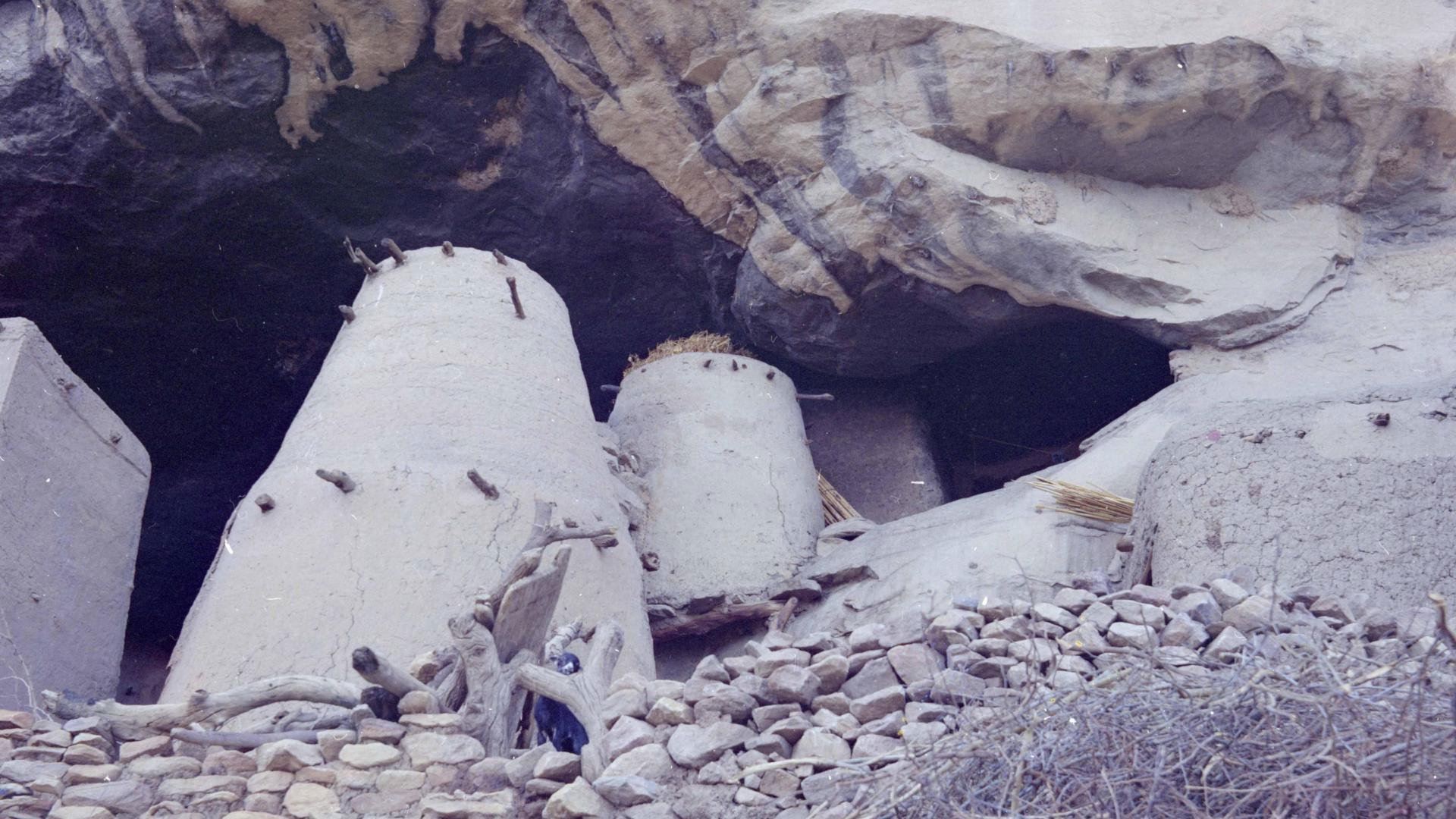
Considered by many to be the quintessential masterpiece of his early works, Herzog's next project can best be described as an expressionistic documentary. Consisting of three distinct parts, Fata Morgana – the apt title of which is the name of the type of mirage formed at the horizon – is an absorbing collection of images combined with poetic voiceover and music to create an ethereal viewing experience of an alien world that is actually our own. Non-narrative and compiled from footage shot over the span of two years, the film remains one of Herzog’s most identifiable works and an ingenious journey of discovery. Amazingly, this haunting masterpiece wasn't planned to be anything like the final film it became. According to Herzog, he first intended the film as a science-fiction piece, complete with a narrative story of a dying world called "Uxmal" and set against exotic locations in the Sahara Desert, Kenya and the Canary Islands. When the storyline was later removed, only the vast landscapes and titular mirages were left, evoking a sense of strangeness. Herzog still describes Fata Morgana as a science-fiction film, however, with "windows into a different world… and all the buildings are taken away and only… the vision is left, and that's what you see here: a mirage." As with Dwarfs, the production was riddled with complications. Herzog suffered severe illnesses during filming, and his crew had to smooth out long stretches of road in order to capture footage from the roof of the van. While filming in Cameroon, the entire crew was even imprisoned by authorities over a case of mistaken identity: A German mercenary who had been sentenced to death was hiding from authorities in the region, and his name was too close for comfort to cinematographer Jörg Schmidt-Reitwein's. The crew was eventually released, but it was an ironically terrifying coincidence for the film focused on the blurred line between illusion and reality.
Release Country
United StatesRelease Date
7/29/2014Media Type
DocumentaryAudio
 |
German | |
| ||
 |
English | |
|
Digital Copy
Not IncludedStudio
Werner Herzog Filmproduktion/Shout! FactorySubtitles
EnglishVideo Format
1080pAspect Ratio
1.33:1Cover Type
DigibookDiscs

Streaming Rank Today
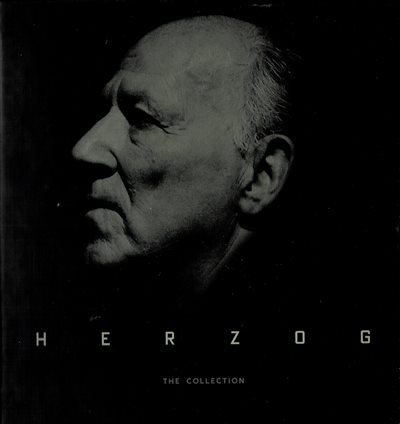
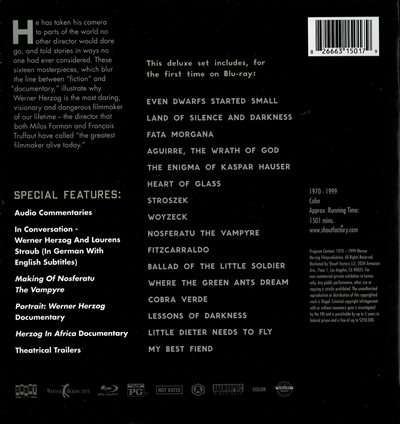
Herzog: The Collection

Lotte Eisner
Narrator (voice)Eugen Des Montagnes
SelfJames William Gledhill
SelfWolfgang von Ungern-Sternberg
Self
Werner Herzog
DirectorWerner Herzog
WriterJoschi Arpa
Producer
Jörg Schmidt-Reitwein
CinematograpyBlind Faith
MusicThe Third Ear Band
Music
Koyaanisqatsi
Sans Soleil
Lessons of Darkness
La Jetée
The Wild Blue Yonder
Man with a Movie Camera
Land of Silence and Darkness
Werckmeister Harmonies
Stalker
Distant Voices, Still Lives
Mirror
Images
Aguirre, the Wrath of God
Heart of Glass
Fitzcarraldo
Cobra Verde
Wheel of Ashes
India Song
Last Year In Marienbad
Jeanne Dielman, 23 Quai du Commerce, 1080 Bruxelles