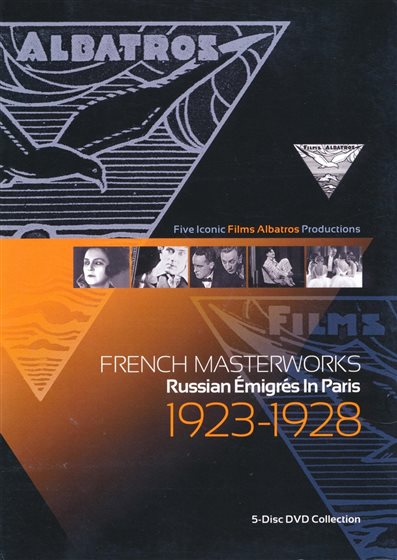
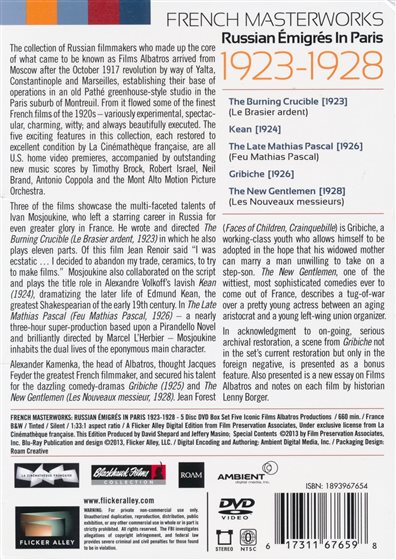
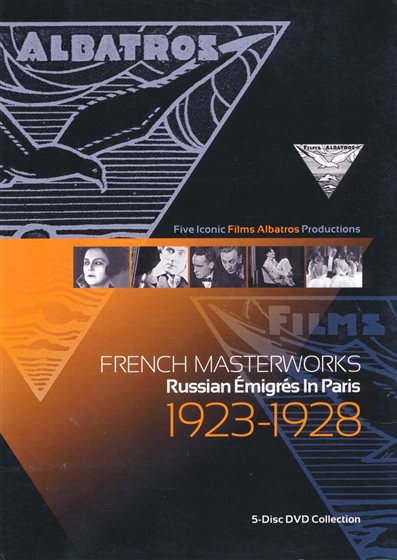
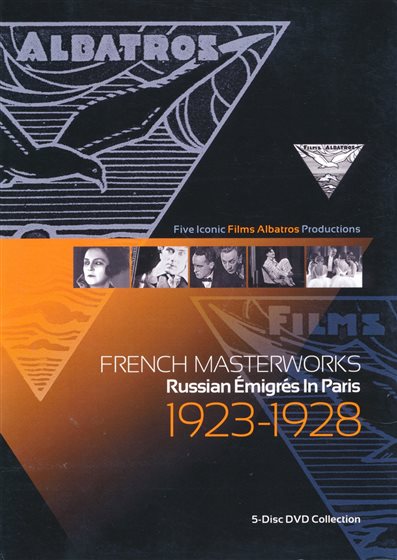
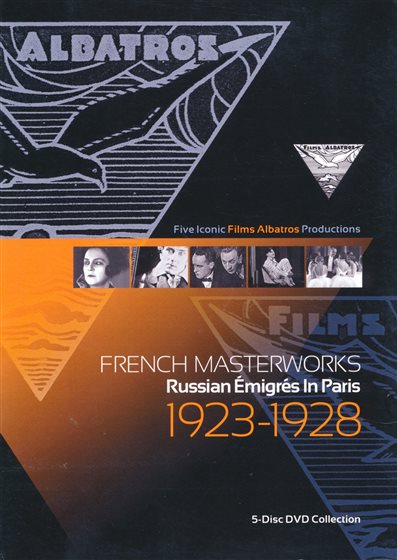
French Masterworks: Russian Emigres In Paris 1923-1929
11h 0m · 5/14/2013
Description
The collection of Russian filmmakers who made up the core of what came to be known as Films Albatros arrived from Moscow after the October 1917 revolution by way of Yalta, Constantinople and Marseilles, establishing their base of operations in an old Pathé greenhouse-style studio in the Paris suburb of Montreuil. From it flowed some of the finest French films of the 1920s – variously experimental, spectacular, charming, witty; and always beautifully executed. The five exciting features in this collection, each restored to excellent condition by the Cinematheque Francaise, are all U.S. home video premieres, accompanied by outstanding new music scores by Timothy Brock, Robert Israel, Neil Brand, Antonio Coppola and the Mont Alto Motion Picture Orchestra. Three of the films showcase the multi-faceted talents of Ivan Mosjoukine, who left a starring career in Russia for even greater glory in France. He wrote and directed The Burning Crucible (Le Brasier ardent, 1923) in which he also plays eleven parts. Of this film Jean Renoir said “I was ecstatic … I decided to abandon my trade, ceramics, to try to make films.” Mosjoukine also collaborated on the script and plays the title role in Alexandre Volkoff’s lavish Kean (1924), dramatizing the later life of Edmund Kean, the greatest Shakespearian of the early 19th century. In The Late Mathias Pascal (Feu Mathias Pascal, 1926) - a nearly three-hour super-production based upon a Pirandello Novel and brilliantly directed by Marcel L’Herbier — Mosjoukine inhabits the dual lives of the eponymous main character. Alexander Kamenka, the head of Albatros, thought Jacques Feyder the greatest French filmmaker, and secured his talent for the dazzling comedy-dramas Gribiche (1925) and The New Gentlemen (Les Nouveaux messieur, 1929). Jean Forest (Faces of Children, Crainquebille) is Gribiche, a working-class youth who allows himself to be adopted in the hope that his widowed mother can marry a man unwilling to take on a step-son. The New Gentlemen, one of the wittiest, most sophisticated comedies ever to come out of France, describes a tug-of-war over a pretty young actress between an aging aristocrat and a young left-wing union organizer. In acknowledgment to on-going, serious archival restoration, a scene from Gribiche not in the set’s current restoration but only in the foreign negative, is presented as a bonus feature. Also presented is a new essay on Films Albatros and notes on each film by historian Lenny Borger.
Release Country
United StatesBarcode
617311676598Release Date
5/14/2013Media Type
MovieDigital Copy
Not IncludedVideo Format
NTSCCover Type
Slip CaseDiscs

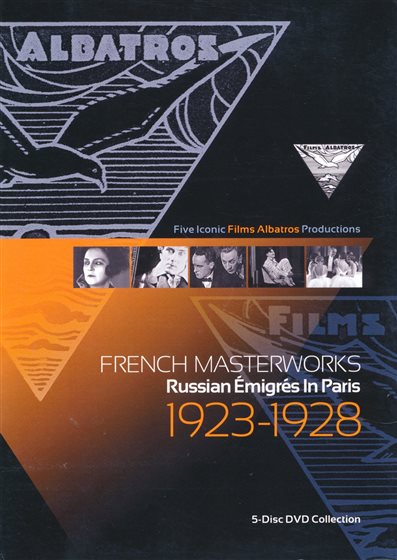
Le brasier ardent
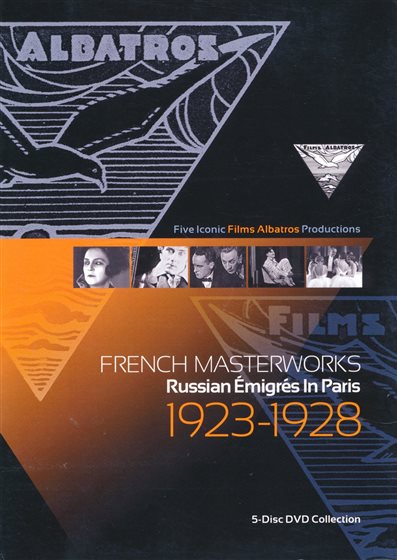
Kean
Feu Mathias Pascal
Gribiche
Les nouveaux messieurs


